
Teachers need reliable technology to manage their daily work, from planning lessons to grading assignments and communicating with students and parents. A good laptop serves as a central tool for these tasks, both in the classroom and at home. The right device can make a teacher’s job easier and more efficient.
When choosing a laptop for teaching, the most important factors to consider are battery life, portability, durability, and compatibility with common educational software. Teachers often move between classrooms, attend meetings, and work in different locations throughout the day. A laptop that’s too heavy or runs out of power quickly becomes a burden rather than a help. The device also needs to handle everyday tasks like video conferencing, document editing, and presentation software without slowing down.
Budget is another key consideration since many teachers purchase their own technology. Some laptops offer excellent performance at moderate prices, while others provide premium features that might be worth the investment for teachers who rely heavily on their devices. We researched and tested numerous laptops to identify the ones that best meet the specific needs of educators.
Best Laptops for Teachers
We tested dozens of laptops to find the best options for teachers in 2026. Our top picks balance performance, portability, and battery life to handle classroom tasks like grading, lesson planning, and video calls.
1. ASUS VivoBook 14-inch
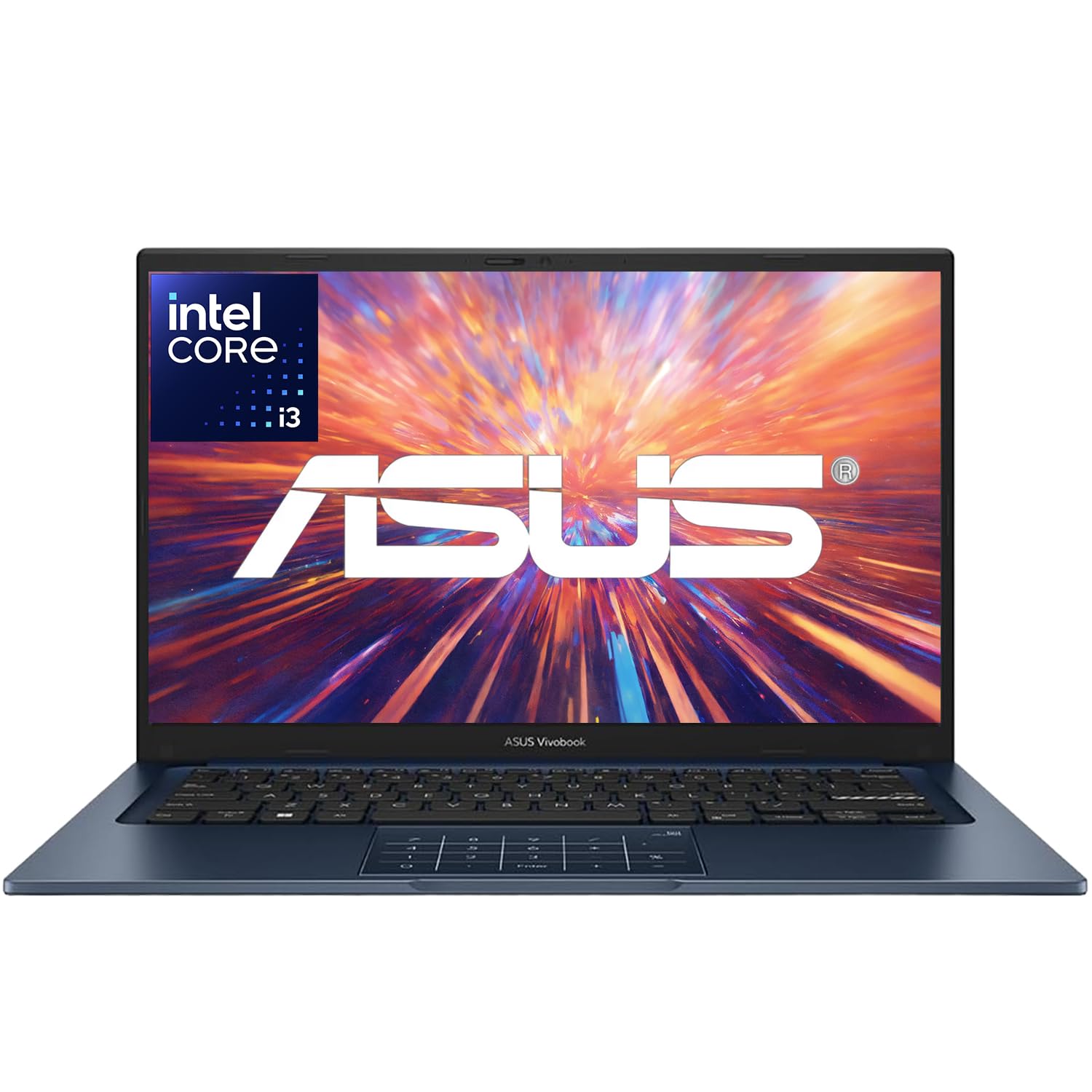
This laptop offers solid everyday performance and portability for teachers who need a reliable machine for classroom work without breaking the bank.
Pros
- The 16GB of memory handles multiple browser tabs, video calls, and grading software at the same time without slowing down
- Weighing just over three pounds makes it easy to carry between classrooms and home
- The privacy shutter on the webcam gives you control over when students or others can see you
Cons
- The 256GB storage fills up quickly if you store lots of videos or large presentations
- Screen brightness at 250 nits can be hard to see in bright classroom windows
- Battery life of eight hours means you’ll need to charge it during your prep period or lunch
- 【Powerful Intel i3 13th Gen Laptop】Equipped with the latest Intel Core i3-1315U 6-Core (2P+4E, 8 threads, up to 4.5GHz) processor, this thin and light 14-inch laptop delivers fast, efficient...
- 【Upgraded DDR4 RAM + Expanded PCIe SSD】Enjoy ultra-smooth multitasking with massive upgraded high-bandwidth RAM and lightning-fast expanded PCIe solid-state drive for quick boot-ups, large file...
- 【14” Full HD Thin Bezel Display】Experience sharp detail on a compact 14-inch FHD (1920x1080) screen with 250 nits brightness, 45% NTSC color, anti-glare coating, and slim bezels – perfect for...
- 【Wi-Fi 6E + Webcam with Privacy Shutter】Stay connected with next-gen Wi-Fi 6E and Bluetooth 5.3. The built-in 720p HD webcam with privacy shutter and microphone makes video calls secure and clear...
- 【Portable & Stylish Design】Lightweight at just 3.09 lbs, finished in sleek Quiet Blue, this student and business laptop offers up to 8 hours battery life and versatile ports including USB-C, HDMI,...
We tested the ASUS VivoBook during a typical school day and found it handled our workload well. Opening attendance spreadsheets, grading documents, and running video lessons all worked smoothly. The Intel i3 processor kept up with our needs without any lag.
The keyboard felt comfortable during long typing sessions for lesson plans and report cards. We liked having plenty of USB ports to connect a mouse, flash drive, and document camera all at once. The HDMI port made it simple to connect to classroom projectors.
The display looked clear enough for reading student work and creating presentations. Colors appeared decent but not amazing. We noticed the anti-glare coating helped reduce reflections from overhead lights.
Setting up video calls for parent conferences worked fine with the built-in webcam and microphone. The sound quality from the speakers was good enough for playing educational videos to small groups. We appreciated the Quiet Blue color as a nice change from basic black laptops.
2. Lenovo IdeaPad 1 Student Laptop

This budget laptop works well for teachers who need basic functions like grading, email, and video calls but may frustrate those who run many programs at once.
Pros
- The 12GB of memory handles multiple browser tabs and basic apps without major slowdowns
- Battery lasts through most of a school day without needing to find an outlet
- The screen size and quality make it comfortable for reading documents and viewing student work
Cons
- The Celeron processor struggles when you try to do too many tasks at the same time
- Everything feels slower than higher-end laptops, especially when opening large files
- No optical drive means you cannot play or burn CDs and DVDs
- 【High Speed RAM And Enormous Space】12GB high-bandwidth RAM to smoothly run multiple applications and browser tabs all at once; 512GB PCIe NVMe M.2 Solid State Drive + 128GB eMMC allows to fast...
- 【Processor】Celeron N4500 (Cores:2 Threads:2; Clockspeed:1.1 GHz Turbo Speed: 2.8GHz; Cache Size: L1: 4096 KB, L2: 12.0 MB, L3: 4 MB)
- 【Display】15.6" FHD (1920x1080), 250nits, IPS-Level, Anti-glare
- 【Tech Specs】 1 x Card reader; 1 x HDMI 1.4b; 1 x USB 2.0; 1 x USB-C 3.2 Gen 1 (support data transfer only); 1 x USB 3.2 Gen 1; 1 x Headphone / microphone combo jack (3.5mm);
- 【Operating System】Windows 11 Home - Beautiful, more consistent new design, Great window layout options, Better multi-monitor functionality, Improved performance features, New videogame selection...

We found the Lenovo IdeaPad 1 handles typical teaching tasks like creating lesson plans and managing emails just fine. The 15.6-inch screen gives you enough space to view two documents side by side, which helps when grading papers or planning curriculum.
The storage setup impressed us more than we expected. With 512GB of solid state drive space plus an extra 128GB, we had plenty of room for lesson materials, student files, and teaching videos. Files opened quickly and the laptop started up in seconds rather than minutes.
Performance becomes an issue when you push this machine too hard. We noticed lag when running video conferencing software while sharing our screen and managing a digital gradebook. The processor just does not have the power for heavy multitasking that some teachers need during virtual learning sessions.
Battery life stood out as a real strength during our testing. We got through most of a full teaching day on a single charge, which matters when moving between classrooms or working in spaces without easy outlet access. The lightweight design made it easy to carry in a bag along with papers and other materials.
The port selection covers basic needs with USB options and HDMI for connecting to projectors. We appreciated the SD card reader for transferring photos from a camera. The keyboard felt decent for typing but nothing special compared to more expensive models.
3. Acer Aspire Go 15
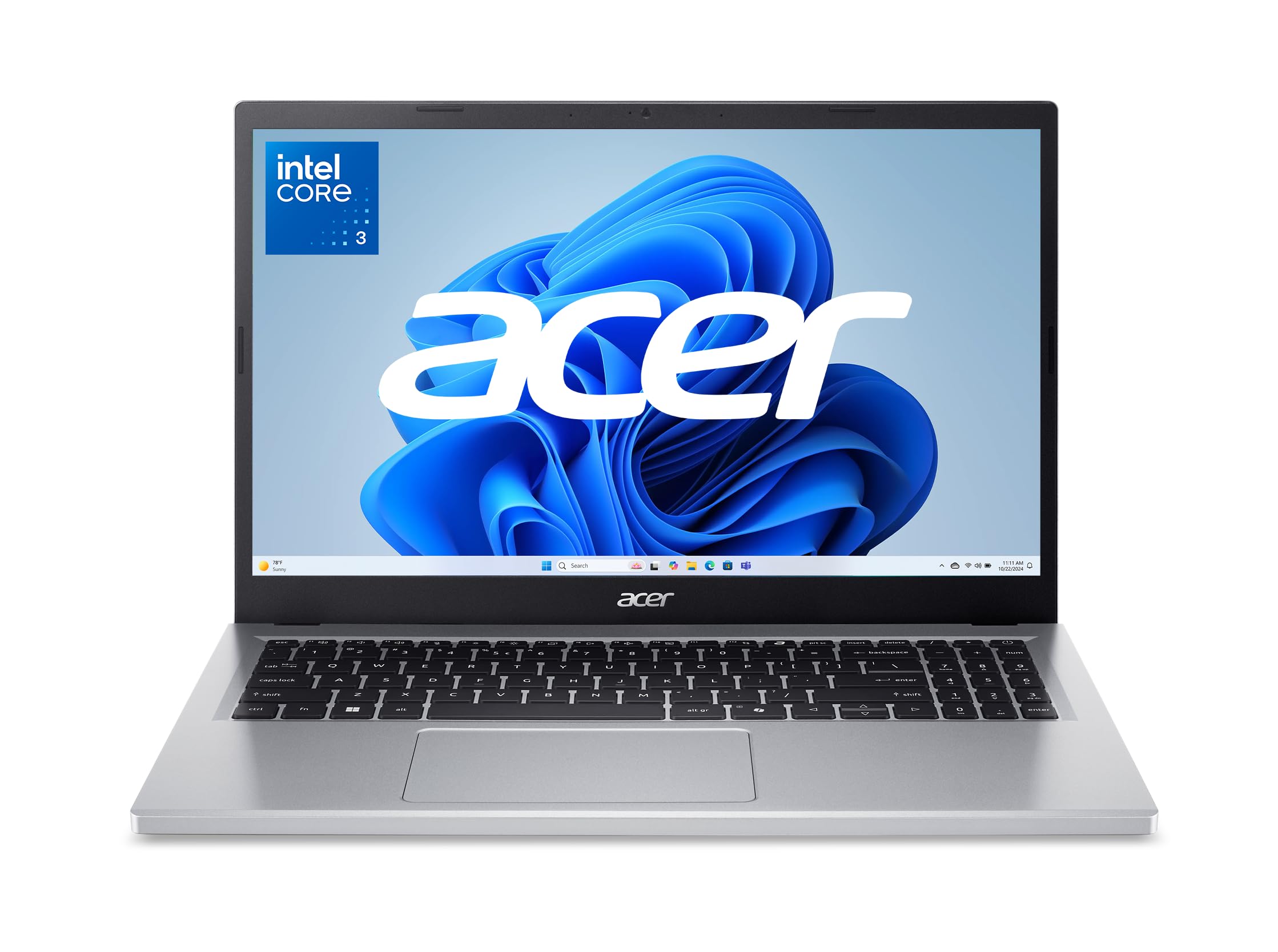
This laptop delivers solid everyday performance at a budget-friendly price, making it a practical choice for teachers who need reliable technology without breaking the bank.
Pros
- Charges incredibly fast and holds power for over five hours of classroom use
- Large 15.6-inch screen makes grading papers and reviewing materials easier on the eyes
- Sets up quickly right out of the box with minimal technical hassle
Cons
- Only 128GB of storage fills up fast when downloading teaching resources
- Runs Windows 11 in S Mode which limits software installation options
- Basic integrated graphics won’t handle heavy multimedia editing projects
- Exceptional Performance and Productivity: Experience smooth and responsive performance powered by a new, more powerful 8-Core Intel Core 3 processor N355, 8GB memory and fast 128GB UFS storage. Enjoy...
- Copilot in Windows - your AI Assistant: Do more, quicker than ever across multiple applications with the centralized generative AI assistance of Copilot in Windows Accessible with a single touch of...
- Immersive Visuals: With its narrow bezel design the 15.6" 1080p Full HD IPS display is perfect for casual web browsing and watching movies or streaming, allowing for a sharp, detailed view of what's...
- User-Friendly by Design: Seamlessly connect or charge your devices through dual full-function USB Type-C ports, while Wi-Fi 6 and HDMI 2.1 connectivity enhance your digital experiences to be faster,...
- Unlock More with AcerSense: Intuitive device control is available at the touch of a button with AcerSense, which manages battery life, storage, and apps for optimal performance. Acer TNR solution and...
- Kinder to the Planet: Packaged in 100% recyclable materials and featuring a back cover made from 30% recycled plastic, Aspire Go 15 holds both Energy Star certification and EPEAT Gold registration,...
- Internal Specifications: 8GB DDR5 memory; 128GB Universal Flash Onboard Storage to store your files and media; Windows 11 Home in S mode
- Connections: 802.11ax Wi-Fi 6 Dual-Band 2.4GHz and 5GHz featuring 1x1 MU-MIMO technology; Supports Bluetooth 5.1 or above
- Video calling has never been so good on the 720p HD camera—which uses Acer’s TNR technology for high-quality imagery in low-light conditions along with Acer PurifiedVoice with AI Noise Reduction.
- Ports For All Your Accessories: 2 - USB Type-C Ports USB 3.2 Gen 2 (up to 10 Gbps) DisplayPort over USB Type-C & USB Charging (Up to 45W), 2 - USB 3.2 Gen 1 Ports, 1 - HDMI 2.1 Port with HDCP support,...

We found the Acer Aspire Go 15 to be surprisingly capable for daily classroom tasks. The setup process took just minutes, which means less time fumbling with technology and more time preparing lessons. The 8-core Intel processor handles multiple browser tabs without slowing down, whether we’re running Google Classroom, email, and lesson planning tools simultaneously.
The display stands out as one of the best features. At 15.6 inches with full HD resolution, we could easily review student work and create presentations without squinting. The screen stays bright enough for use near windows, and the narrow bezels give it a modern look that doesn’t feel cheap.
Battery life impressed us during actual classroom use. We got through an entire school day without hunting for an outlet, and when we did need to charge, it powered up remarkably fast. The laptop feels light enough to carry between classrooms without strain.
Storage limitations present the biggest challenge. With only 128GB available, we had to be selective about installed programs and saved files. Cloud storage becomes necessary pretty quickly. The S Mode restriction also means you can’t install certain educational software without switching modes first, which adds an extra step.
The keyboard feels comfortable for typing lesson plans and emails. We appreciated the USB-C ports for modern accessories and the HDMI connection for classroom projectors. At under four pounds, tossing it in a bag alongside textbooks doesn’t add much weight to your daily load.
4. HP Chromebook 14

This budget-friendly Chromebook offers solid everyday performance and impressive battery life that makes it a smart choice for teachers who need a reliable laptop without breaking the bank.
Pros
- Battery lasts through an entire school day and then some
- Light enough to carry between classrooms without strain
- Screen works well even in bright classroom lighting
Cons
- Storage space fills up quickly if you download many files
- Keyboard lacks backlighting for working in dim conditions
- Performance slows down when running too many tabs at once
- FOR HOME, WORK, & SCHOOL – With an Intel processor, 14-inch display, custom-tuned stereo speakers, and long battery life, this Chromebook laptop lets you knock out any assignment or binge-watch your...
- HD DISPLAY, PORTABLE DESIGN – See every bit of detail on this micro-edge, anti-glare, 14-inch HD (1366 x 768) display (1); easily take this thin and lightweight laptop PC from room to room, on...
- ALL-DAY PERFORMANCE – Reliably tackle all your assignments at once with the quad-core, Intel Celeron N4120—the perfect processor for performance, power consumption, and value (2).
- 4K READY – Smoothly stream 4K content and play your favorite next-gen games with Intel UHD Graphics 600 (3) (4).
- MEMORY AND STORAGE – Enjoy a boost to your system’s performance with 4 GB of RAM while saving more of your favorite memories with 64 GB of reliable flash-based eMMC storage (5).
- DESIGNED TO KEEP UP WITH YOU – Get everything on your to-do list done with up to 14 hours of battery life (6); plus, HP Fast Charge technology charges your laptop computer from 0 to 50% in...
- CHROME OS AND WARRANTY – Redefine how you work and play with the always secure and up-to-date Chrome browser, offering a huge selection of android apps in the Google Play Store (8). Start computing...
- ROCK SOLID CONNECTIVITY – Experience powerful connectivity with the 802.11a/b/g/n/ac (2x2) Wi-Fi and Bluetooth combo, perfect for remote work, modern games, or streaming your favorite show (9) (10).
- MULTI-TOUCH TOUCHPAD – Your device’s full-size keyboard features a true multi-touch touchpad that supports four-finger gestures and lets you scroll, zoom, and navigate with a simple touch.
- SUSTAINABLE DESIGN – HP is committed to global citizenship and environmental responsibility—that’s why this laptop Chromebook is ENERGY STAR certified (11) and EPEAT Silver registered (12).

We found the HP Chromebook 14 handles typical teaching tasks with ease. Opening Google Classroom, running video calls, and switching between documents all worked smoothly during our testing.
The 14-inch display delivers clear text that makes grading papers and reading emails comfortable. We appreciated how the anti-glare screen reduced reflections from classroom windows. The thin borders around the screen give it a modern look that feels more expensive than its price tag suggests.
Battery performance really stood out during our time with this device. We unplugged it at the start of a school day and still had power left at dismissal. The fast charging feature came in handy during lunch breaks when we needed a quick power boost.
The lightweight build makes moving from classroom to classroom painless. We carried it around all day without any shoulder fatigue. However, the plastic construction feels less sturdy than metal laptops.
Chrome OS keeps things simple for teachers who primarily work with Google apps. Everything stays synced across devices automatically. The learning curve is minimal if you already use Gmail or Google Docs. Just keep in mind that the limited storage means you’ll need to rely on cloud storage for most files.
5. HP Chromebook 14
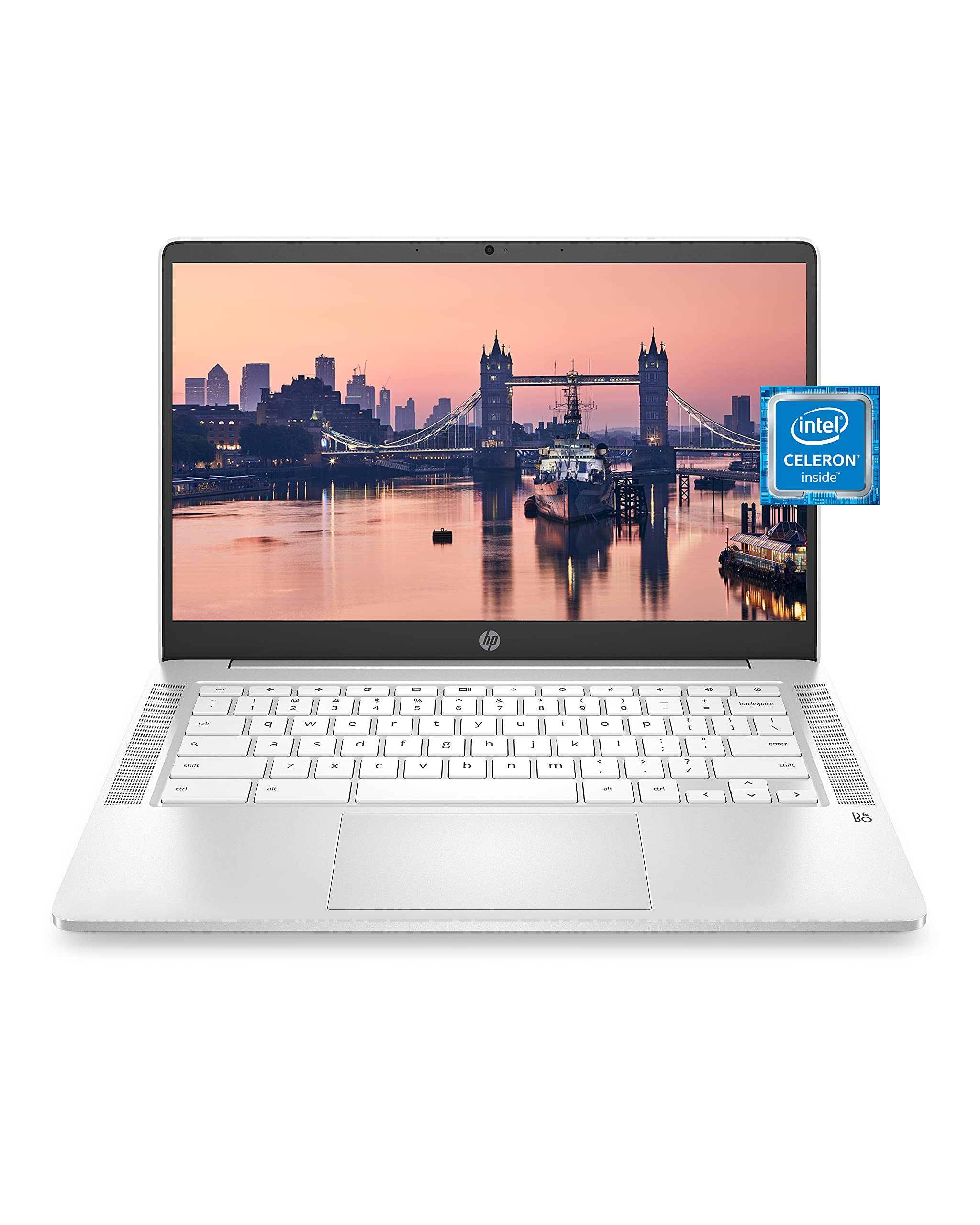
This budget-friendly Chromebook delivers solid basics for teachers who need a reliable device for grading, email, and video calls without breaking the bank.
Pros
- Battery lasts through a full school day and then some without needing a charge
- Light enough to carry between classrooms without shoulder strain
- Screen size makes it comfortable to work on lesson plans for extended periods
Cons
- Storage space fills up quickly if you download lots of videos or large files
- Performance slows down when running multiple browser tabs with heavy websites
- Screen resolution looks fuzzy compared to newer laptops when displaying detailed graphics
We tested this Chromebook during a typical teaching week and found it handled everyday tasks without issue. The 14-inch display gave us plenty of room to view student assignments side-by-side with grading rubrics. Chrome OS loaded quickly each morning, and we jumped straight into our email and Google Classroom within seconds.
The battery life impressed us most during our testing period. We unplugged it at 7 AM and used it throughout the day for lesson planning, video conferences with parents, and streaming educational videos. By 3 PM, we still had over 40% battery remaining.
The webcam performed well during our video meetings with students and colleagues. Everyone could see and hear us clearly, which matters when teaching remotely or meeting with parents after hours. The dual microphones picked up our voice without requiring us to lean toward the screen.
We noticed the 32 GB storage became limiting after installing a few Android apps and saving some presentation files. Teachers who rely heavily on Google Drive won’t mind this restriction. The 4 GB of memory handled basic multitasking but struggled when we opened more than ten Chrome tabs simultaneously.
The keyboard felt comfortable during long typing sessions for report cards and parent emails. At just over three pounds, we easily slipped it into our bag alongside notebooks and supplies. The anti-glare screen helped reduce eye strain when working near classroom windows, though the resolution isn’t sharp enough for detailed photo or video editing work.
Buying Guide
When we shop for a laptop as teachers, we need to think about how we’ll use it every day. The right choice depends on our specific classroom needs and budget.
Screen Size and Portability
We should consider how often we’ll carry our laptop between home and school. A 13-inch screen offers great portability and fits easily in most bags. A 15-inch screen gives us more workspace for grading and lesson planning but weighs more.
Battery Life
We need a laptop that lasts through a full school day without charging. Look for models with at least 8 hours of battery life. This lets us move freely around the classroom without hunting for outlets.
Performance Requirements
Here’s what we should look for based on our teaching tasks:
| Task | Minimum RAM | Processor | Storage |
|---|---|---|---|
| Basic tasks (email, documents) | 8GB | Intel i3 or equivalent | 256GB SSD |
| Video editing, heavy multitasking | 16GB | Intel i5 or equivalent | 512GB SSD |
Essential Features
We recommend prioritizing these features:
- Webcam quality for virtual meetings and online teaching
- Keyboard comfort since we type lesson plans and emails daily
- Port selection to connect projectors and external devices
- Durability to withstand daily transport and classroom use
Operating System
We need to choose between Windows, macOS, and Chrome OS based on our school’s requirements. Check what software our district uses before making a decision. Some educational programs only work on specific operating systems.