
You crank the engine, watch the screen glow, and then you realize the audio is gone. The display lists the song title and tracks the time, but the cab stays completely quiet. This problem drives people crazy, and even long-time car owners get stumped because the radio looks alive.
The truth is, a working display tells you the head unit has power and is functioning at a basic level. It does not tell you whether sound is actually reaching your speakers. When your car radio loses sound but display works, the issue usually sits somewhere between the source of the audio and the speakers themselves, not in the screen you’re staring at.
Below, you’ll find the real reasons this happens and a full walkthrough for fixing it yourself before you spend money on a shop visit.
Why Does the Car Radio Work but Have No Sound?
There are several distinct causes behind this problem, and narrowing them down starts with understanding what each one actually affects.
- Blown fuse: Most vehicles run their amplifier or speaker circuit through a separate fuse from the one powering the display. A blown car radio fuse cuts sound completely.
- Wiring issues: Loose, corroded, or disconnected wiring between the head unit and speakers can silence audio output entirely, even though every other system reads normal.
- Dead battery: A weak battery sometimes supplies just enough voltage to run the display but not enough to power the amplifier. And it, in turn, draws more current.
- Faulty head unit: Internal component failure inside the radio itself can knock out audio processing while leaving the clock and menu functions untouched.
- Antenna problems: This mainly affects broadcast reception rather than total silence, but a damaged antenna can make it seem like the whole system has gone quiet on FM or AM.
- Outdated software: Some infotainment systems glitch after a failed update, muting audio output as a side effect.
- Ignition switch problems: A worn ignition switch can send inconsistent power to different circuits, starving the amp while the display stays lit.
- Corroded ground wire: A poor ground connection disrupts the signal path long before you’d notice anything on screen.
- Amplifier issue: If your vehicle has a separate amp, this is one of the single biggest reasons for car radio no sound but display works situations, since the amp handles the actual push of sound to your speakers.
8 Ways to Fix a Car Radio With No Sound
1. Turn Up the Volume and Disable Mute
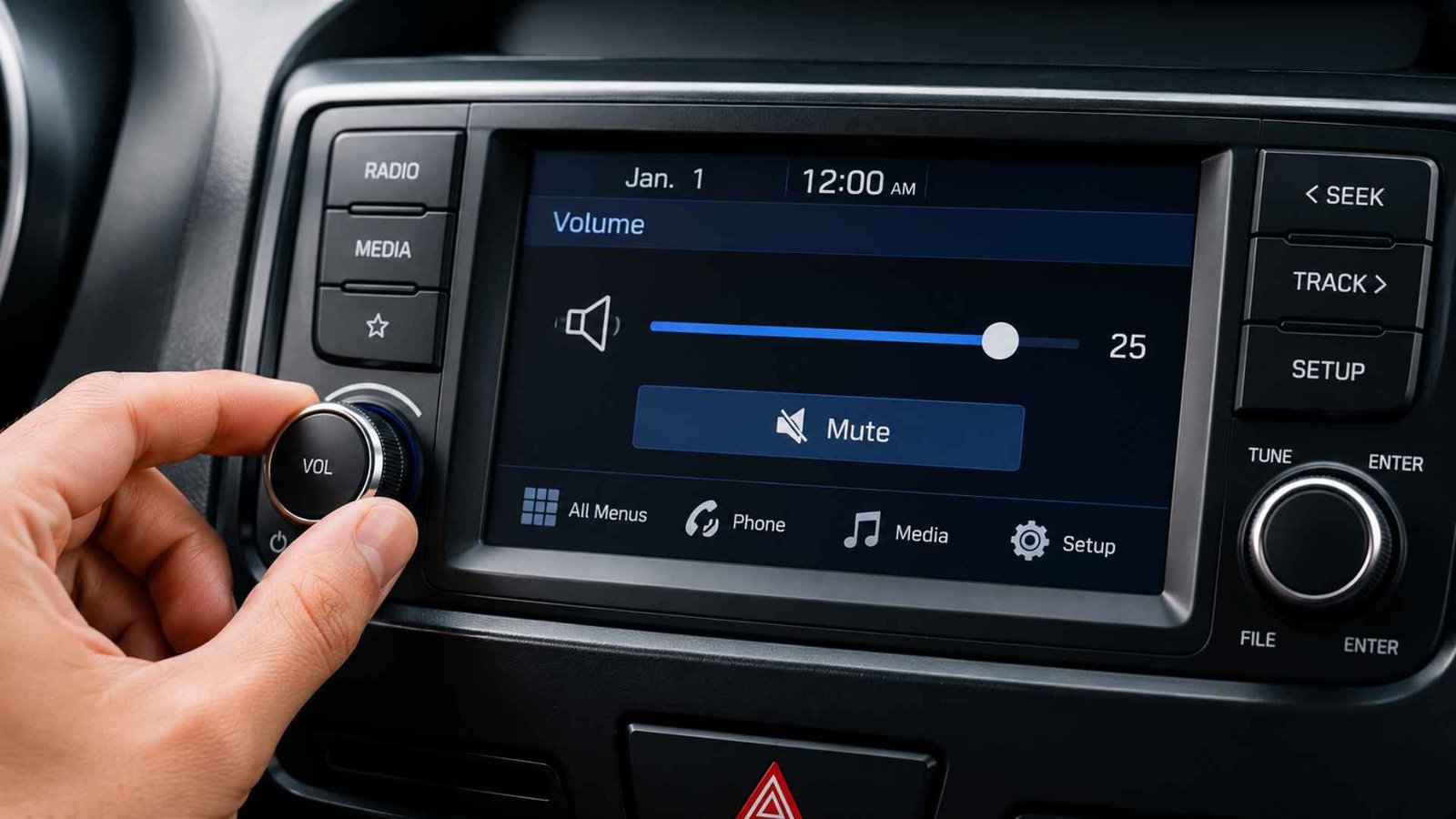
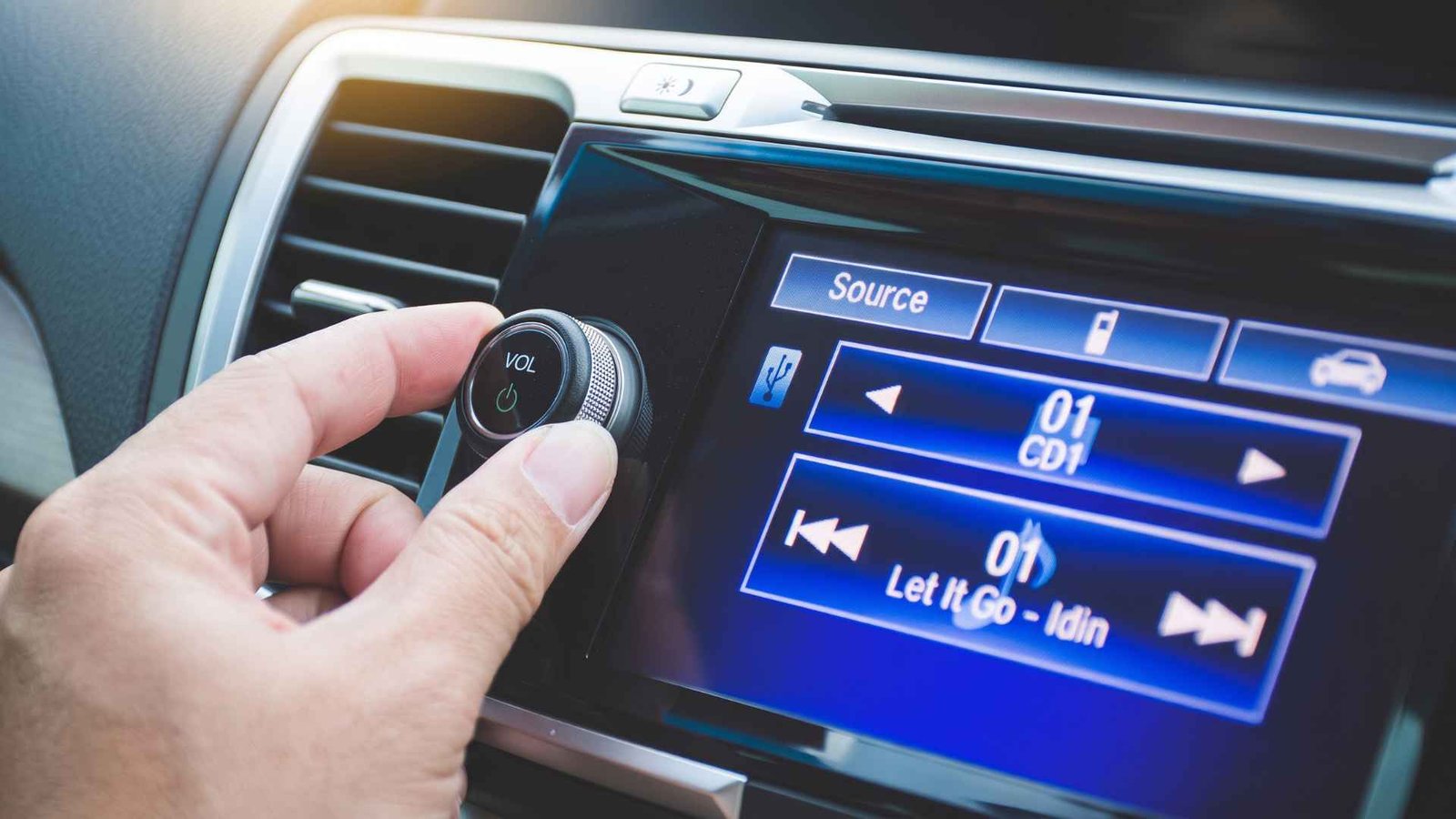
Start with the obvious. A stray press of a mute setting button or a volume knob turned down by accident happens more often than people admit, especially with kids in the back seat. Bump the volume up manually and check the mute icon on your display. If it’s active, tap it off and see if sound returns immediately.
2. Reset the Balance and Fade
Sometimes the audio is working just fine, though the balance control has been pushed entirely to one side or the fade setting has been shifted all the way to the front or rear. This could make it seem like total silence when really the sound is just being routed somewhere you can’t hear it. Head into your audio settings and center both balance and fade, then test again.
3. Change the Audio Source
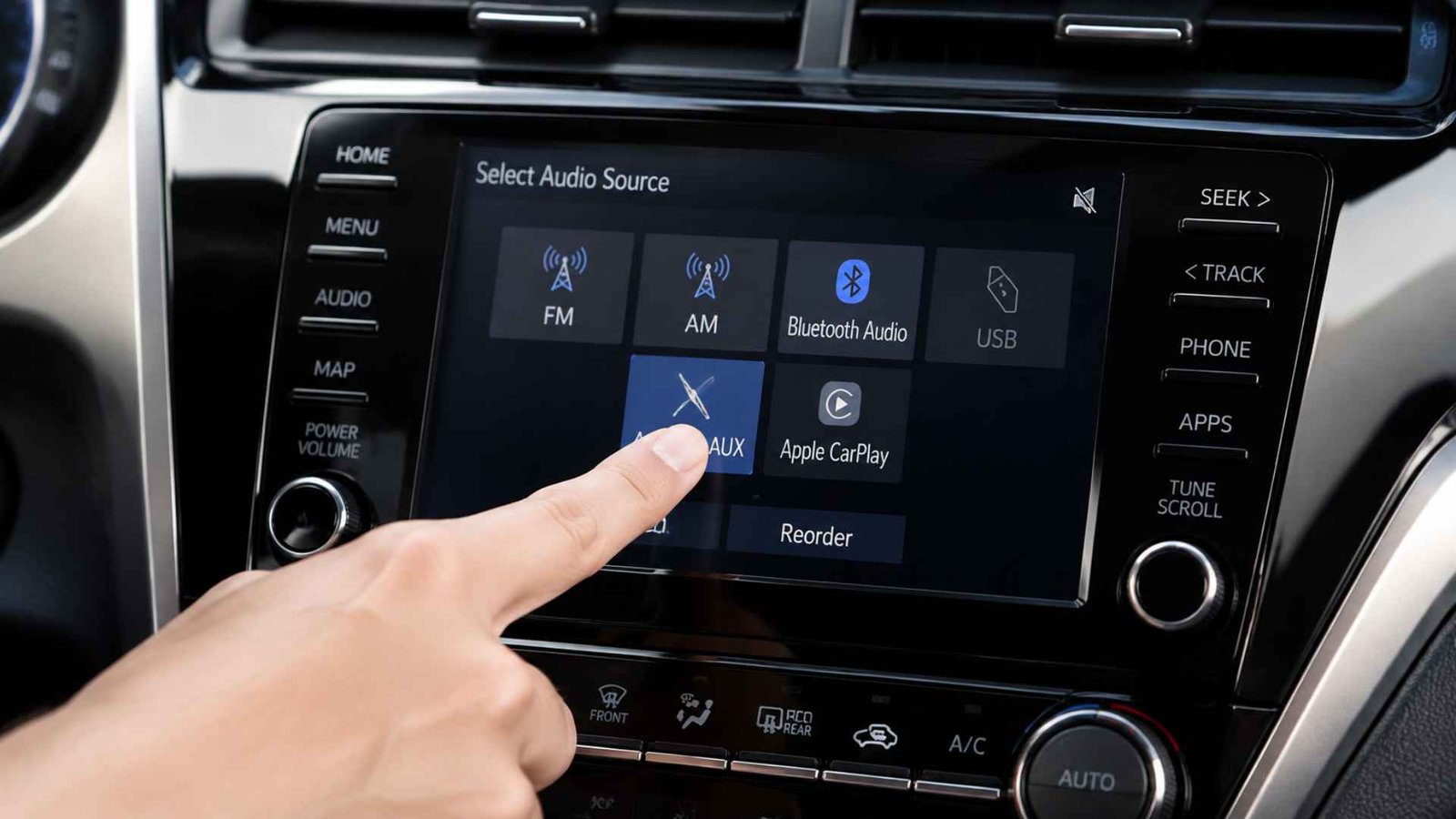
If you’re plugged into Bluetooth or an aux cable and nothing plays, switch your audio source back to FM radio. This isolates whether the issue is with your phone connection or the entire audio system. A car stereo no sound complaint that only shows up on Bluetooth points to a pairing issue rather than a hardware failure.
4. Restart the Infotainment System
Modern systems run on small computers, and computers freeze. Hold the power button for ten to fifteen seconds, or pull the fuse for the head unit for a minute if a soft reset doesn’t work. This clears out software hiccups that mute the audio signal without affecting the screen.
5. Check the Radio and Amplifier Fuses
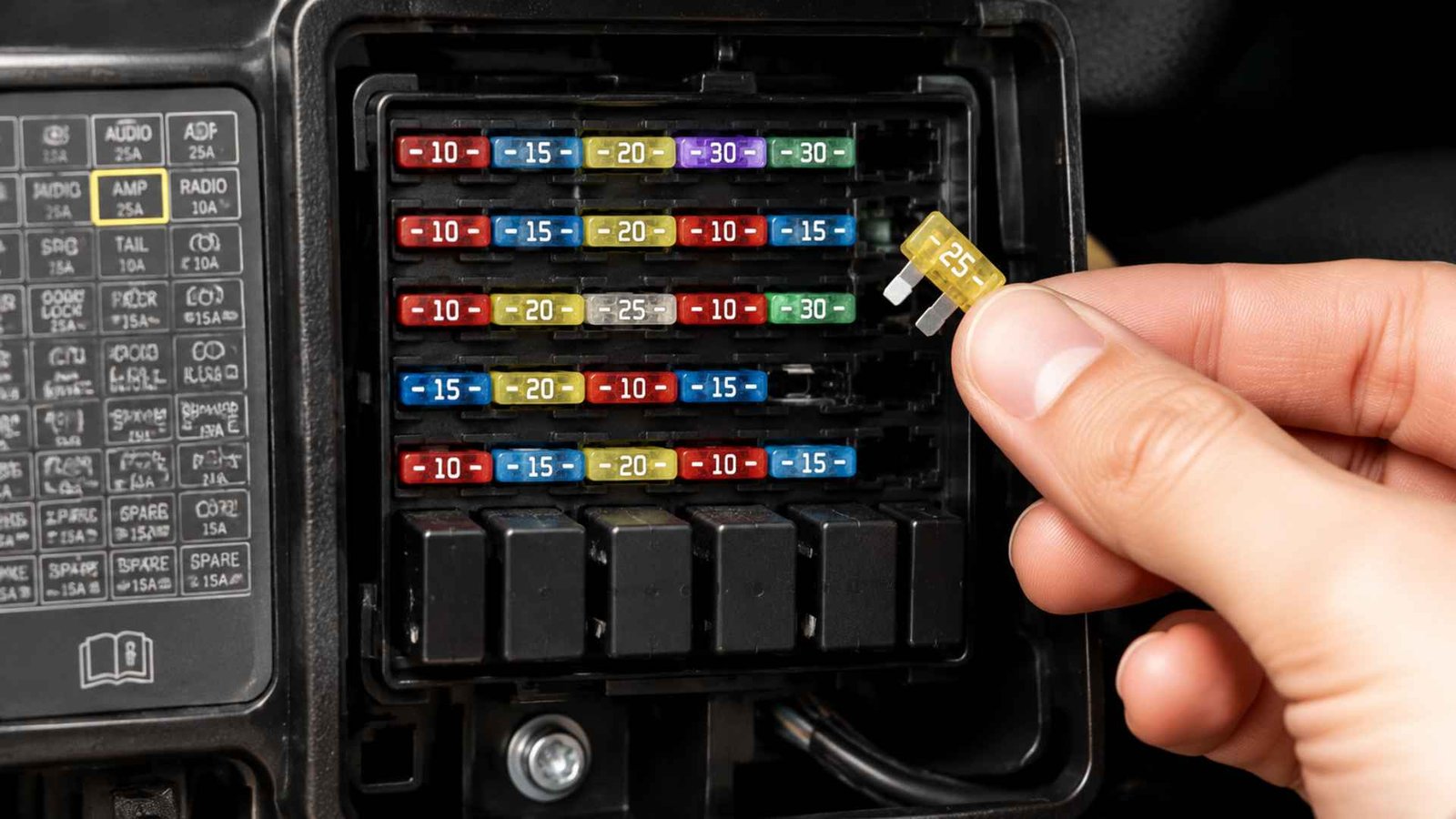
Pull out your owner’s manual and locate the fuse box diagram. Look specifically for the fuse tied to audio or amp power, separate from the one for the radio display. A blown amplifier fuse is one of the fastest fixes on this list. Swap it with an identical replacement and test the system before moving to anything more complex.
6. Check Whether the Amplifier Is Turning On
If your vehicle has an aftermarket or factory amplifier, locate it, usually under a seat, in the trunk, or behind a side panel, and check for a small indicator light. No light generally means the amp isn’t receiving power or a turn on signal from the head unit. This is a frequent cause of car amplifier no sound cases, particularly in vehicles with upgraded sound systems installed after purchase.
7. Inspect Speaker and Audio Wiring
Take out a speaker panel and look at the connections. Speaker wiring that has come loose, frayed, or corroded from moisture will kill sound output even though every other part of your stereo runs perfectly. Wiggle the connectors gently while the radio plays to see if sound cuts in and out, which points directly at a loose connection.
Another Good Read: Spytec Atlas GPS Tracker Review
8. Test the Speakers and Head Unit
Swap a speaker you know works into a different position, or borrow one from another vehicle if you can. If it plays fine elsewhere but stays silent in your car, the problem is local to that wiring run or that specific speaker output channel on the head unit. This step alone solves a surprising number of car speakers not working complaints, since it separates a bad speaker from a bad connection.
How to Tell Where the Problem Is
| Symptom | Most Likely Area to Check |
| Display works, no speakers work | Amplifier, fuse, head unit, main audio wiring |
| Only one speaker is silent | Speaker or speaker wiring |
| FM has sound but Bluetooth doesn’t | Phone, Bluetooth, or source settings |
| Sound returns after restart | Software or system logic |
| Sound cuts out after driving | Wiring, amplifier heat, or protection mode |
| Problem started after stereo installation | Harness, ground, amplifier turn on, signal wiring |
When Should You Stop Troubleshooting Yourself?
- There is a clear point where home garage fixes stop being worth the risk. You need to call in a professional mechanic if a fuse keeps blowing every single time you swap it out.
- The same rule applies if you must pull apart the dashboard to reach deep wiring bundles.
- Walk away if an amplifier stays locked in protection mode or sits in a spot you cannot reach.
- Exposed copper wires or melted plastic insulation are also major red flags.
- Many modern vehicles run complex infotainment systems that require corporate diagnostic computer links. You should also stop if a test requires you to probe live electrical clips without proper safety training.
For advanced testing, a shop technician can trace the signal from the deck to the speaker cones with professional car audio troubleshooting equipment. Factory diagnostic procedures check amplifier power inputs, factory mute lines, ground shorts, and data modules that you cannot access with cheap home tools.
How Much Does It Cost To Repair a Car Radio?
Costs swing wildly depending on what’s actually broken. Repairs can be as minor as swapping a fuse, or they could point to a bigger issue like a failed head unit, and that vague range is exactly why so many drivers get frustrated trying to diagnose things themselves.
In many cases, the cost to fix a radio turns on but no sound problem might run as little as two dollars for a fuse, or it could climb past a thousand dollars if a full factory radio replacement is required.
Labor rates at a shop typically add another layer of cost on top of parts, so getting an accurate diagnosis first can save you from paying for guesswork.
Frequently Asked Questions (FAQs)
How do I reset my car radio?
Hold the power button down for several seconds, or disconnect the battery for a few minutes to force a full reset. Some models also have a small reset pinhole near the unit itself.
Will a car radio still work if fuse is blown?
The display and basic functions might still work off a separate circuit, but a blown fuse tied to audio output will leave you with a car stereo has no sound but display works situation until it’s replaced.
How do I know if my car amplifier has failed?
Check for a power indicator light on the amp itself. No light, unusual heat, or a persistent car stereo sound cuts out pattern after startup are all signs pointing toward amplifier failure.
Wrapping Up…
A silent stereo with a fully lit display is frustrating precisely because nothing looks wrong on the surface. Whether your car radio sound stopped after a bumpy road, a recent install, or seemingly out of nowhere, working through these steps in order will get you to the source of the problem faster than guessing. Start simple with volume, mute, and balance settings, then move toward fuses and wiring before assuming the worst. Most cases end up being a small, inexpensive fix rather than a full replacement, so it’s worth taking the time to check each step before calling in professional help.