

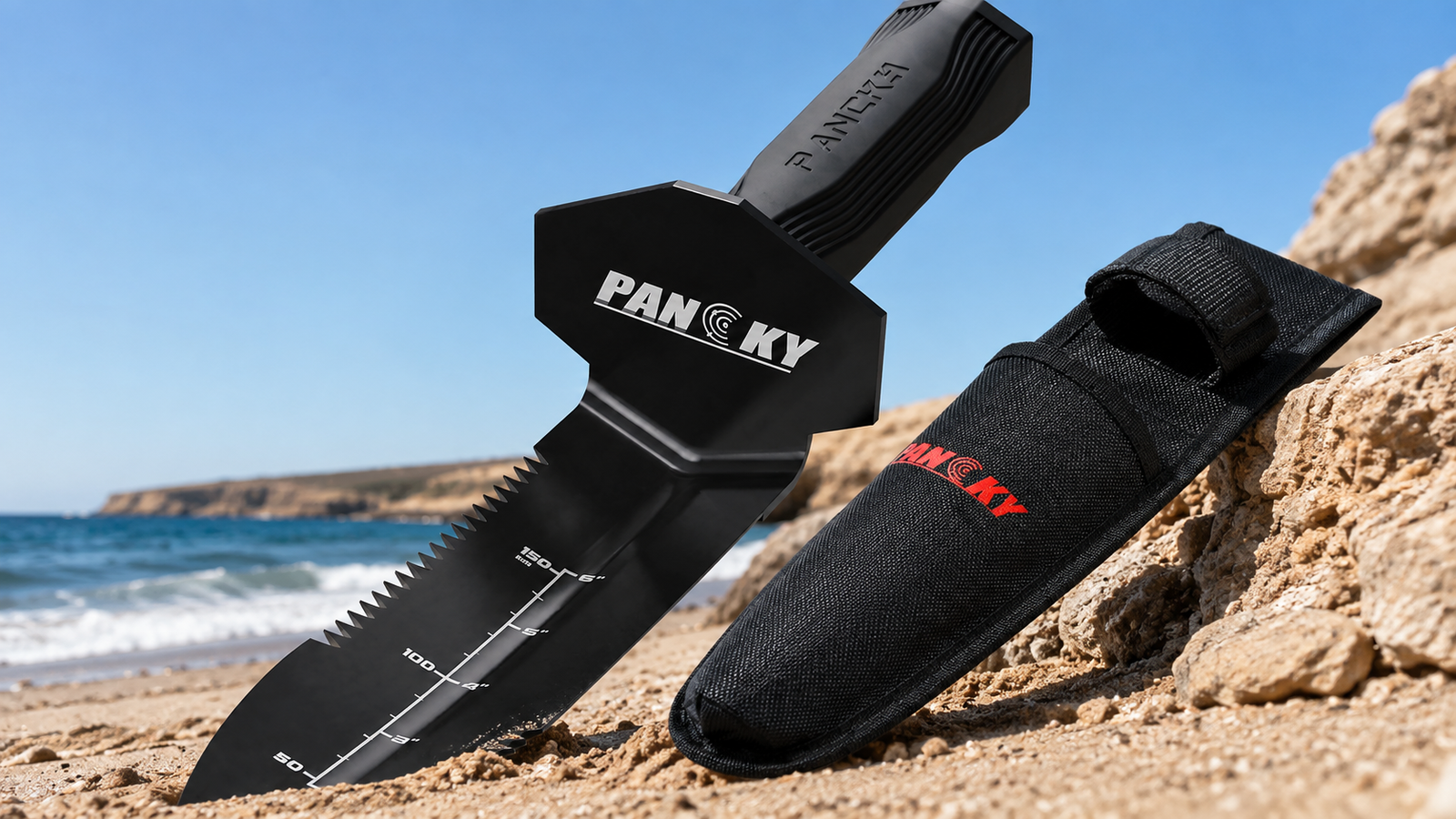
Anyone who has spent hours out in the field metal detecting knows that your digging tool matters just as much as your detector. A weak blade or a handle that flexes under pressure can ruin a great hunt.
The same goes for a sloppy design that leaves massive holes behind. We took the Pancky metal detecting shovel out into the field for multiple digging sessions. We wanted to see if it actually holds up to real abuse or if it just looks nice on Amazon.
This Pancky Metal Detecting Shovel Review covers everything from how the blade handles rocky soil to how it stacks up against a few other solid options on the market.
Pancky Metal Detecting Shovel at a Glance
- Dimensions: 3.14 x 3.14 x 12.2 Inches
- Type: Metal Detecting Digger and Hand Trowel
- Blade Material: Heat Treated Manganese Steel
- Handle: Detachable 7.5 Inch Extension
- Included: Waterproof Carrying Sheath

What Makes the Pancky Shovel a Great Digging Tool?
The real strength of this metal detecting shovel comes down to the choice of metal. It uses manganese steel, which scores a high rating on the Mohs hardness scale to handle brutal ground pressure without bending.
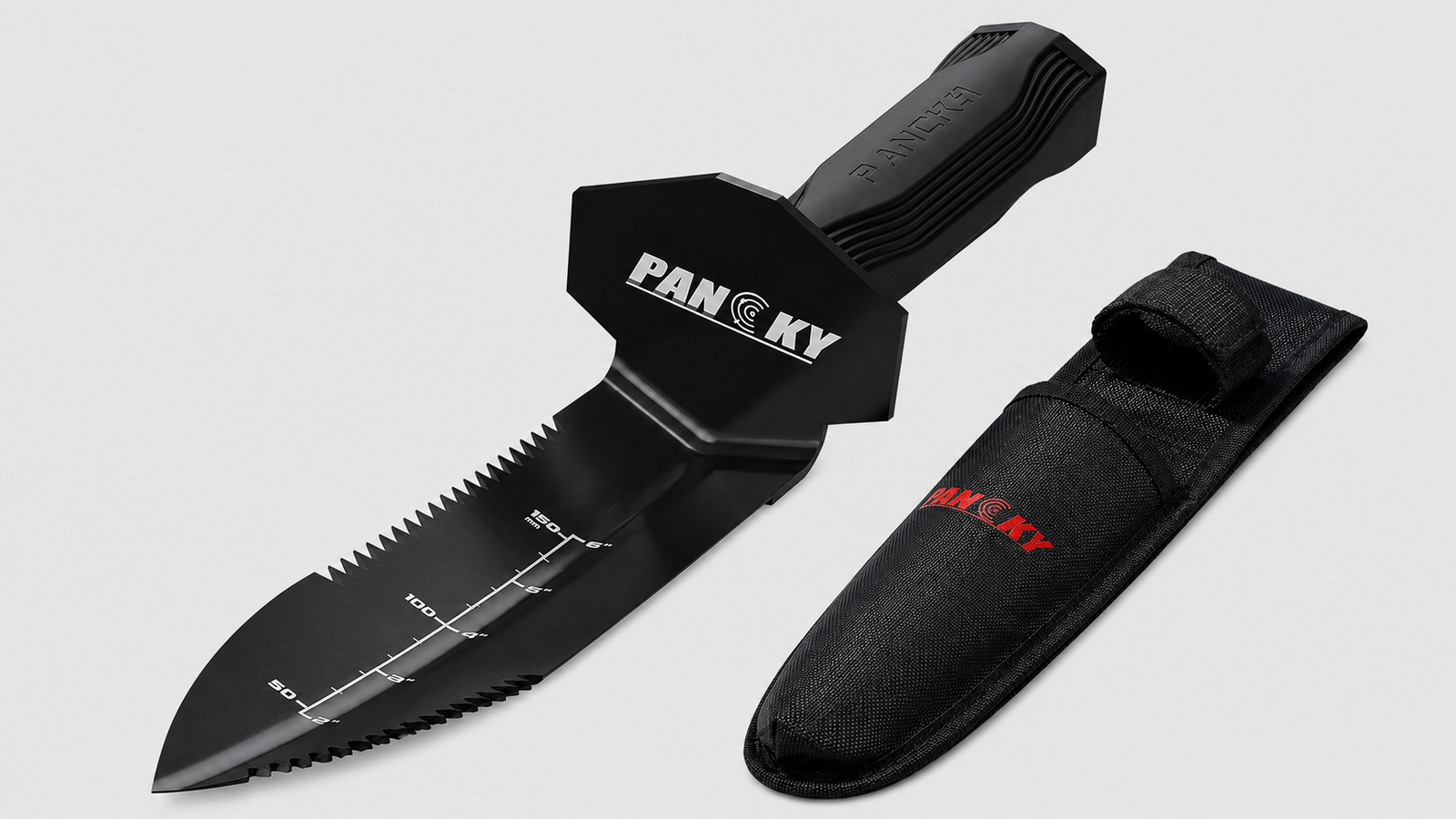
The blade features double serrated edges built to saw right through stubborn roots, em, even the thick ones that ruin basic garden trowels. You can take out the handle sections to swap between a short tool for quick plug digs and a full size shaft for deep targets.
It also includes a heavy duty waterproof sheath to pack the tool away safely. This setup is built for serious field demands, and it helps you get targets out fast so you can find more keepers during a long hunt.
A Closer Look at the Pancky Metal Detecting Shovel’s Features
Heavy-Duty Blade for Tough Soil
The heat treated manganese steel blade is what keeps this tool from snapping in half. The point stays perfectly straight even when you are prying against buried rocks. That is the exact spot where cheap digging tools give out, usually leaving you with a bent tip or a cracked edge on your first day out. Manganese steel is famous for absorbing heavy impact without cracking, so it cuts a clean plug through hard dirt every time.
The designers balanced this crazy strength against a light around 2 pound total weight. It gives you a rugged tool that won’t wear you out during a twelve hour hunt. Ain’t that exactly what you want when you are miles away from your truck?
Comfortable Grip During Long Hunts
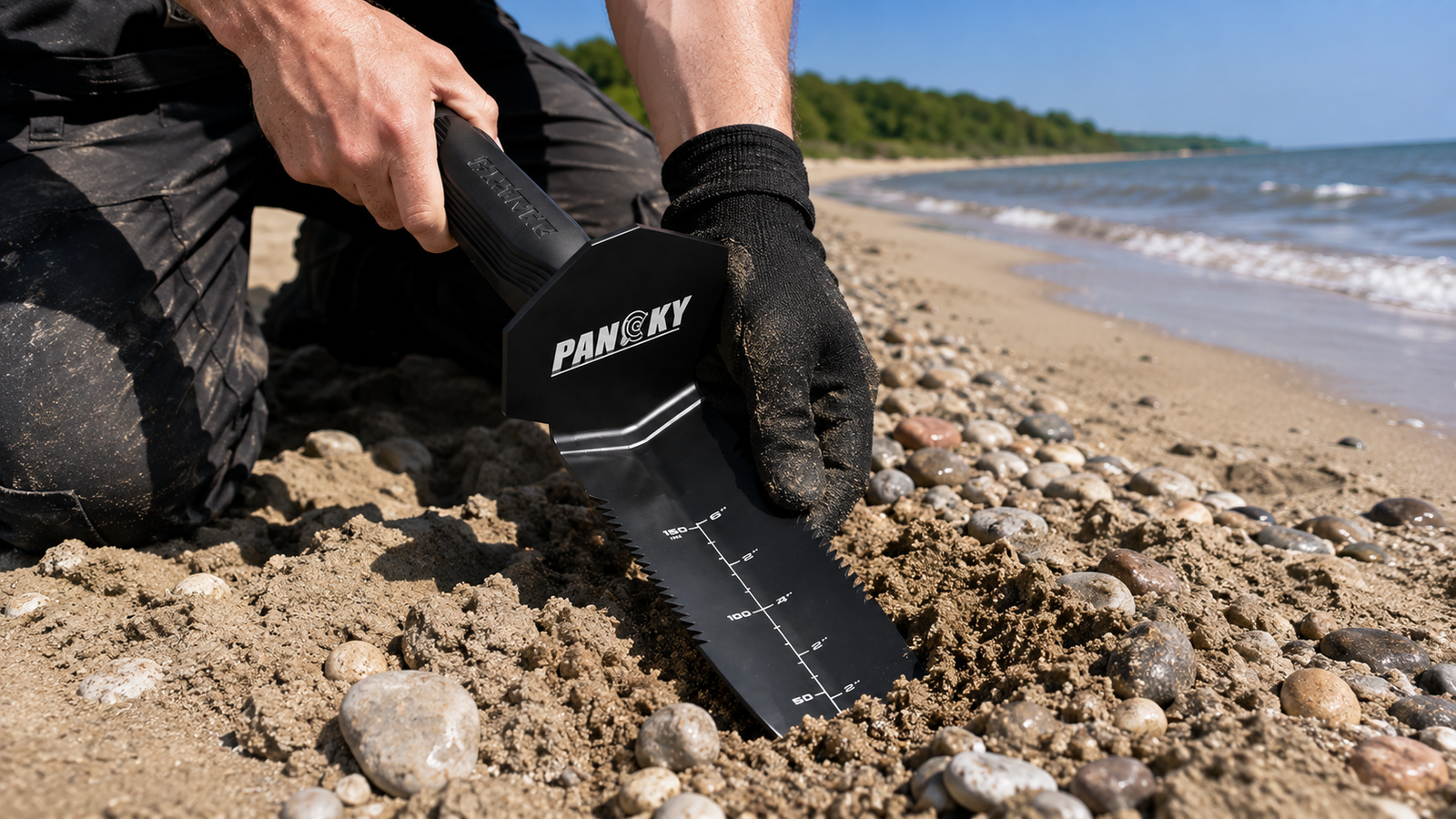
Long detecting sessions demand a handle that doesn’t fight your grip after an hour of repeated digging. The manganese steel handle paired with the detachable extension gave us enough control to apply decent downward pressure on it without our hand cramping up.
Cuts Through Roots More Easily
The serrated blade is great for roots, and this is where the double serrated edge design genuinely earns its keep. We cut through roots right out of the box without needing to see back and forth repeatedly. It saved us real time compared to a plain edged trowel we’ve used previously.
Compact Size
At just over 12 inches long, this sits in a practical middle ground. It’s long enough that you don’t have to stoop constantly while digging, but short enough to stay quick and light for a full day out in the field. That balance is genuinely harder to nail than it sounds, since a lot of digging tools lean too far in one direction or the other.
Durable Welded Construction
The welded points on the blade and handle assembly showed no signs of separating or loosening throughout our testing period. For a tool that’s going to take repeated impact against rocky, compacted, or root filled ground, that kind of structural durability matters far more than a flashy paint job.
Suitable for Metal Detecting, Gardening and Camping
Beyond dedicated treasure hunting, this tool transitions well into general gardening work and camping use. The serrated edge that cuts through roots so effectively for detecting purposes works just as well for clearing garden beds or digging a fire pit trench at a campsite.
How We Tested the Pancky Metal Detecting Shovel
We took the Pancky metal detecting shovel out across several different soil conditions to get a genuine sense of how it performs beyond a single easy dig. Rocky ground was the first test, since that’s where digging tools tend to reveal their weaknesses pretty much the fastest. The point held up consistently without bending or chipping, even when we hit buried stones directly.
From there, we tested it against compacted clay style soil and areas with heavier root systems nearby. The double serrated blade cut through roots without much resistance, and the depth measurement markings on the blade gave us a quick, practical way to gauge how deep we were digging without needing to pull out a separate tool.
We also compared plug size against a standard garden shovel we had on hand. The Pancky metal detecting shovel consistently left a much smaller hole. It’s obviously beneficial a lot when you are digging on public land or maintaining lawns where minimizing ground disturbance is part of responsible detecting etiquette.
The waterproof sheath held up fine through a few muddy sessions, though the sheath itself is a little on the cheap side compared to the blade quality, something worth knowing before you buy.
What We Like
- Strong manganese steel build
- Detachable extended handle
- Sharp double-serrated blade
- Built-in depth markings
- durable carrying sheath
- Great for outdoor adventures
- Compact treasure hunting tool
What We Don’t Like
- Average sheath quality
- Slightly heavy design
- Small digging blade
Best Alternatives to the Pancky Metal Detecting Shovel
Lrlxe Metal Detector Shovel

The Lrlxe tool uses a heavy duty double serrated edge design that matches up well against the Pancky shovel. Instead of a separate carrying case, you get a rugged nylon sheath with a built in belt loop. A lot of detectorists prefer this setup because it allows for easy hands free access while you walk around a site. The tool measures 12.8 by 3.74 by 2.56 inches and weighs exactly 0.55 kilograms. That makes it a bit lighter than the Pancky, but it still packs enough durability to handle camping, weeding, and gardening. The black and red color scheme makes the blade easy to spot if you drop it in thick grass. Hanging the tool right at your hip is a massive upgrade over keeping it buried in a bag between targets.
CKG Metal Detector Shovel
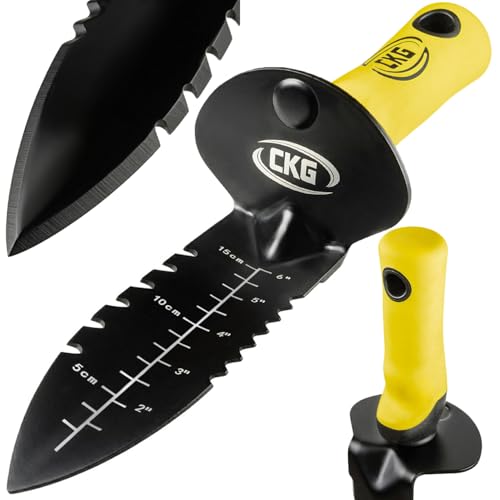
The CKG option takes a completely different approach to the build. The company blends steel, rubber, and stainless metal parts together instead of forging a single piece of manganese steel. At 10.24 by 2.76 by 1.18 inches and weighing just 1.4 pounds, it is way more compact than the Pancky or the LRLXE.
That makes it a fantastic choice if you want to take out weight from your backpack. The double serrated edge still does a great job sawing through roots. Plus, you get a dedicated digging knife and sheath combo, which is a great extra tool that the other brands do not throw in. If you are mostly sticking to gardening, weeding, or lighter beach hunts, this is a much more practical, travel friendly alternative.
Frequently Asked Questions (FAQs)
Is the Pancky metal detecting shovel durable?
Based on our testing across rocky, compacted, and root heavy ground, the manganese steel construction held up consistently without bending, chipping, or loosening at the welded joints. The point specifically showed no signs of wear even after repeated contact with buried rocks, which is genuinely one of the more demanding tests a digging tool for metal detecting can face.
Can I use a regular garden shovel for metal detecting?
Technically you could get by without a dedicated tool if you had to, but a standard garden shovel is built for volume digging rather than precision. Metal detecting calls for smaller, controlled holes to minimize ground disturbance, and a full sized shovel simply cannot match the compact footprint or serrated edge control that a purpose built digger provides.
Shovel versus hand digger, do I need both?
Most serious detectorists carry both for different situations. A hand digger, usually only about three feet long, works well for shallow targets and quick digs, long enough that you don’t have to stoop but short enough to stay quick and light. A shovel like the Pancky handles deeper targets and tougher ground where a smaller hand digger would struggle to make real progress.
Another good read: Is the Escort Redline 360c Worth It?
Wrapping Up…
The Pancky metal detecting shovel delivers genuinely strong performance for the price, particularly through its manganese steel blade and reliable welded construction. It held up through rocky, root filled, and compacted ground without any real complaints beyond a sheath that could use an upgrade and a bit of extra weight that comes with the territory of durable steel construction. For anyone serious about treasure hunting, gardening, or camping and looking for one dependable metal detecting shovel that handles multiple environments, this is a solid, honest recommendation.