
Humidity can cause hot days to feel hotter than they ought to. If you’ve suffered through high humidity during summer days, you probably wanted to find a solution besides increasing the air conditioning.
Humidity makes it impossible for rooms to feel comfortable, no matter how high the reading on the thermostat is. That’s why so many people want to know whether dehumidification can be of any help in getting rid of heat in their homes.
In fact, dehumidifiers do not cool rooms. They simply remove the excess moisture which contributed to raising the humidity level. However, although the room may feel slightly cooler, the temperature remains unchanged.
Does a Dehumidifier Actually Lower Room Temperature?

If you are thinking about using the dehumidifier in order to regulate temperature in the room, we hate to say it but it would not operate for that purpose.
Although people often search questions like does dehumidifier cool the air or lowers it, the answer lies in the way dehumidifier works.
The moment it gets plugged in, all the electricity power that goes to it converts into heat produced by the components of the unit: compressor, motor and the fan.
Also, the dehumidifier generates heat due to condensation process that happens when water vapor condenses into liquid. In other words, there’s no heating of the air outside the room since the unit is located within this very room.
Turns out, the air that leaves the dehumidifier has a slightly higher temperature than that of the air supplied to the device.
That’s why the dehumidifier cannot cool down the air. If you want to achieve this purpose, then the best solution would be to install an air conditioner.
What Does a Dehumidifier Do?
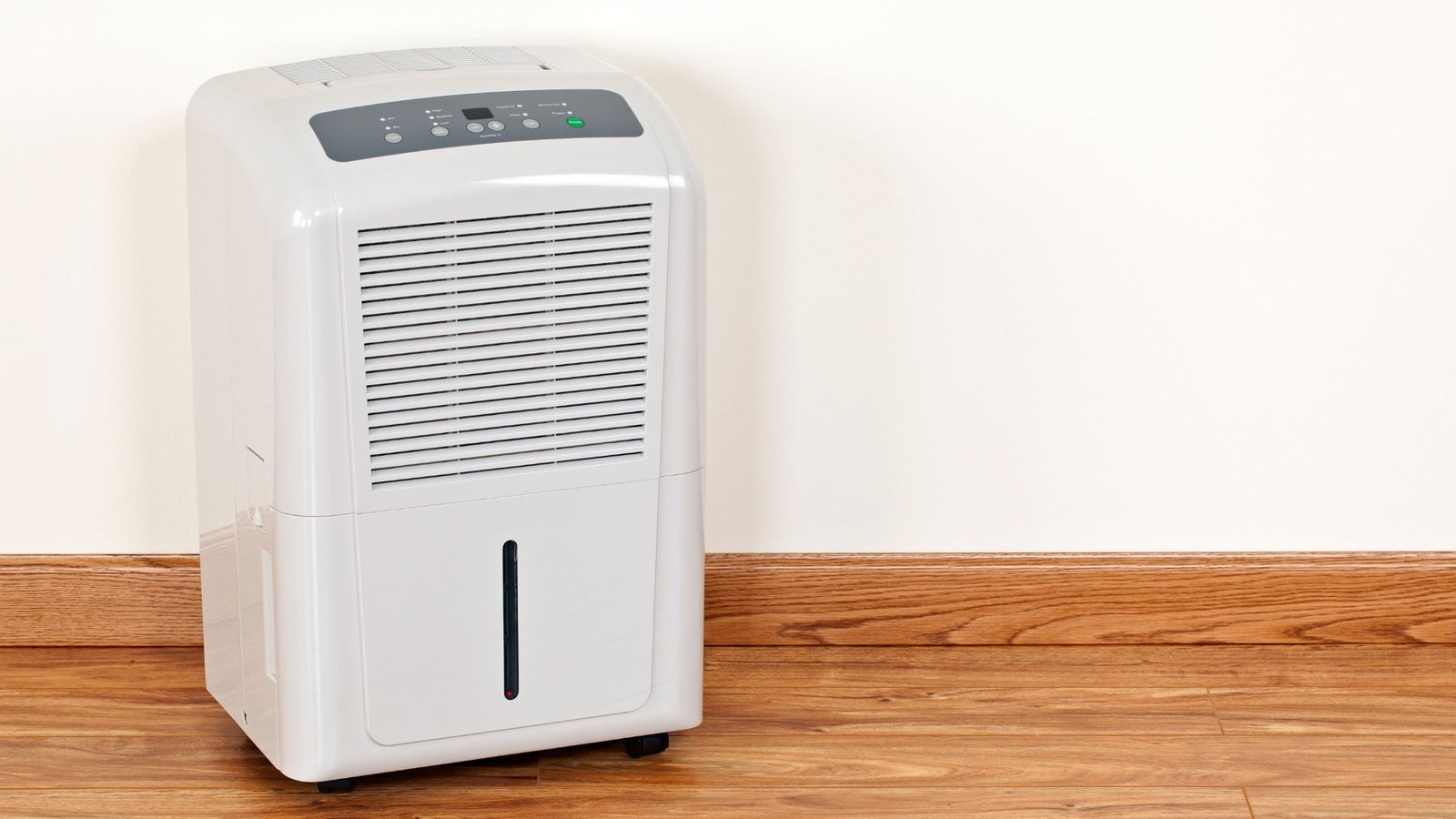
In mechanical terms, a dehumidifier is very much like a refrigerator. The process begins with a fan sucking in moist air. This air first goes through a filter and then passes through a cooling coil, where the moisture is condensed. Moisture is form on the cooling coil, after which it is drained either into a bucket or out through a drain hose.
The process continues with the operation of the heating coil. This coil reheats the air drastically lowering its humidity before being released back into the room.
In short, the function of a dehumidifier is to remove humidity from the air through condensation. This is the opposite of what a humidifier does—adding moisture back into the room.
Some dehumidifiers skip the evaporative process, and instead use a desiccant material to absorb moisture directly. They also have a heater to evaporate the water from the desiccant, but they tend to put out more heat than compressor models mentioned above.
You can easily tell the difference between the two by how much your hand warms up when placed near the exhaust.
What Humidity Level Makes a Room Feel Comfortable?
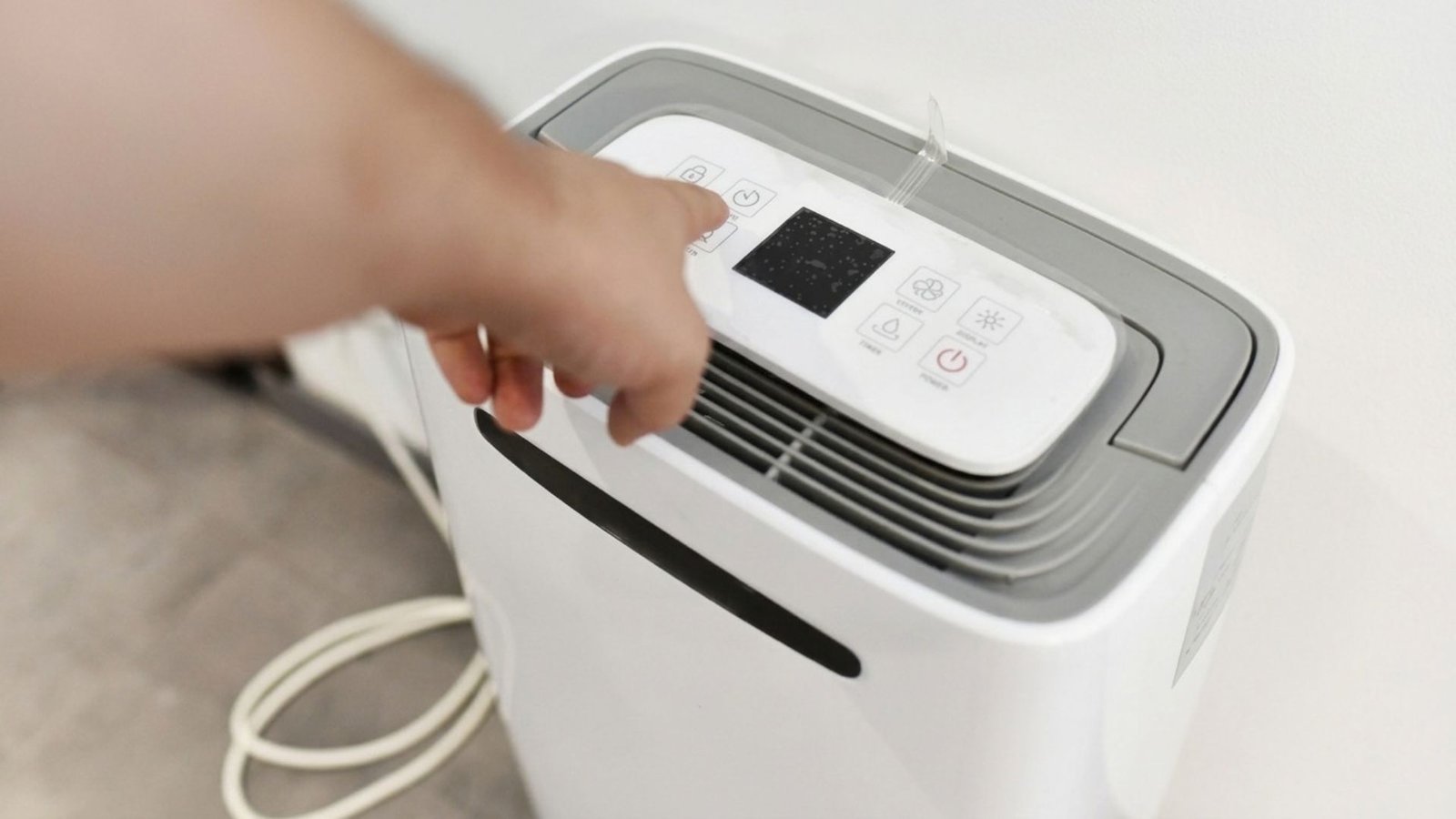
The human body cools itself by sweating. Sweat evaporates off the skin, cooling the body down. However, that process cannot happen if the air is already damp and saturated.
In this situation, the skin remains sweaty, and the body is unable to cool effectively. Not only does it affect the body’s natural ability to cool itself, but sweat that can’t evaporate makes the room feel hotter and more oppressive, despite what a thermometer says.
Humidity and room temperature work together to determine just how hot a person will feel. By removing moisture from the air, you’re allowing sweat to evaporate more quickly, which in turn allows your body to cool itself more efficiently.
And that’s how you feel most comfortable in warm, dry weather rather than warm, humid conditions where sweat doesn’t evaporate. This is often referred to as the dehumidifier feel cooler effect, and it applies to home comfort too.
What is the humidity level you should stick to? The EPA recommends keeping indoor humidity between 30% and 50% to prevent mold growth. For pure human comfort, most people only start to feel bothered or sticky when the relative humidity climbs past 60%. Sticking to a target under that threshold keeps the air breathable, crisp, and comfortable.
Dehumidifier vs Air Conditioner
Both machines pull water out of the air, but they handle heat in opposite ways. An AC moves heat from inside to outside. The air cools down and loses moisture along the way. That’s a true cooling effect.
A dehumidifier keeps all its heat indoors. Hoping a dehumidifier make room colder during a heat wave usually ends in disappointment. Using a dehumidifier and air conditioner together can make sense in a swampy climate, since the AC handles the heat and the dehumidifier finishes off the leftover dampness. In dry heat, skip the dehumidifier.
| Feature | Dehumidifier | Air Conditioner |
|---|---|---|
| Removes moisture | Yes | Yes |
| Lowers air temperature | Usually no | Yes |
| Adds heat indoors | Usually yes | No during normal cooling |
| Best use | Humidity control | Cooling plus humidity removal |
| Ideal for | Damp rooms | Hot rooms |
Can a dehumidifier make a room feel warmer?
The answer is yes. Dehumidifier heats up the room a little bit but the amount of heat generated depends on the machine type, size of the space it operates in and the duration for which it has worked. This effect is most pronounced in compact spaces.
If you are using the dehumidifier in an office which is the size of a closet or in a small guest room, the heat produced would raise the temperature even more.
The heat produced by the dehumidifier is not too significant so the exceptions to this general effect of the appliance may be noticeable in especially humid spaces.
How to Make a Room Feel Cooler With a Dehumidifier
These habits help the dehumidifier feel cooler effect kick in faster and keep the extra warmth in check.
- Park it in the middle. Leave a foot or so of open space on every side so air moves through freely. Shoving it against a wall chokes the intake.
- Shut the doors and windows. Outside air keeps feeding the machine fresh moisture, and it’ll chase that dampness all day.
- Add a fan. Moving air across your skin speeds up evaporation and gets you comfortable sooner. Aim it at wherever you sit.
- Run it in the cooler hours. Evenings and early mornings let the unit work while the outdoor air isn’t piling on extra heat.
- Set the humidistat with care. Dial it to the middle of the comfortable range and leave it alone. Pushing it lower eats power and nudges the dehumidifier room temperature up.
- Clean the filter and coils. Dust forces the compressor to work harder and shed more heat. Check ’em every few weeks.
- Take care in the bedroom. If you run a dehumidifier in bedroom quarters at night, park it a few feet from the bed and set it before you turn in. Steady, mild dryness is what builds real bedroom comfort.
Should You Run a Dehumidifier in Summer?
Certainly, if the house is not dry, there is a good reason to use a dehumidifier in summer for the basement, dark bedrooms and places where the windows mist up or linen is not able to get dry on summer days. However, this could be pointless if the air is already dry as it is the case in hot summer weather conditions.
Buy a cheap hygrometer and check the humidity first. If the room keeps sitting above about 50% RH, the dehumidifier has a job to do. If the reading is already in the 30% to 50% range, running it longer may only waste electricity.
Frequently Asked Questions
Can a dehumidifier replace an air conditioner?
Not when temperature is the problem. A dehumidifier takes out moisture and gives off a little heat. In a mild, muggy room that trade can feel good enough. In a truly hot room, you need the AC to carry the load.
Does lower humidity make 75°F feel cooler?
Usually, yes. The swing is smaller at 75°F than on a scorching afternoon, but sticky air still clings to your skin. Drier air lets sweat evaporate, and the room feels crisper even though the thermometer hasn’t moved.
What humidity should I set my dehumidifier to?
Around 45% to 50% is a good place to start. EPA recommends keeping indoor humidity between 30% and 50%. If the room still feels damp or you keep seeing condensation, check the reading with a hygrometer before pushing the setting lower.
What happens when you dehumidify a room too much?
Air that gets too dry can leave your skin, nose, throat, and eyes feeling dry or irritated. You are also making the machine run more than it needs to. Once the room lands in a comfortable humidity range, let the humidistat cycle the dehumidifier off.
Wrapping Up…
Dehumidifiers don’t cool a room, and it ain’t their job. What they do is pull out the moisture that makes warm air feel heavy. Drier air helps sweat evaporate, and your body handles the cooling from there. If you’re still wondering whether a dehumidifier make room colder, the thermometer will answer for you, and the answer is no. Use one where dampness is the trouble, keep a hygrometer handy, and let the AC deal with genuine heat. Match the tool to the job and you’ll spend less, sleep better and quit fighting a room that never feels right.