
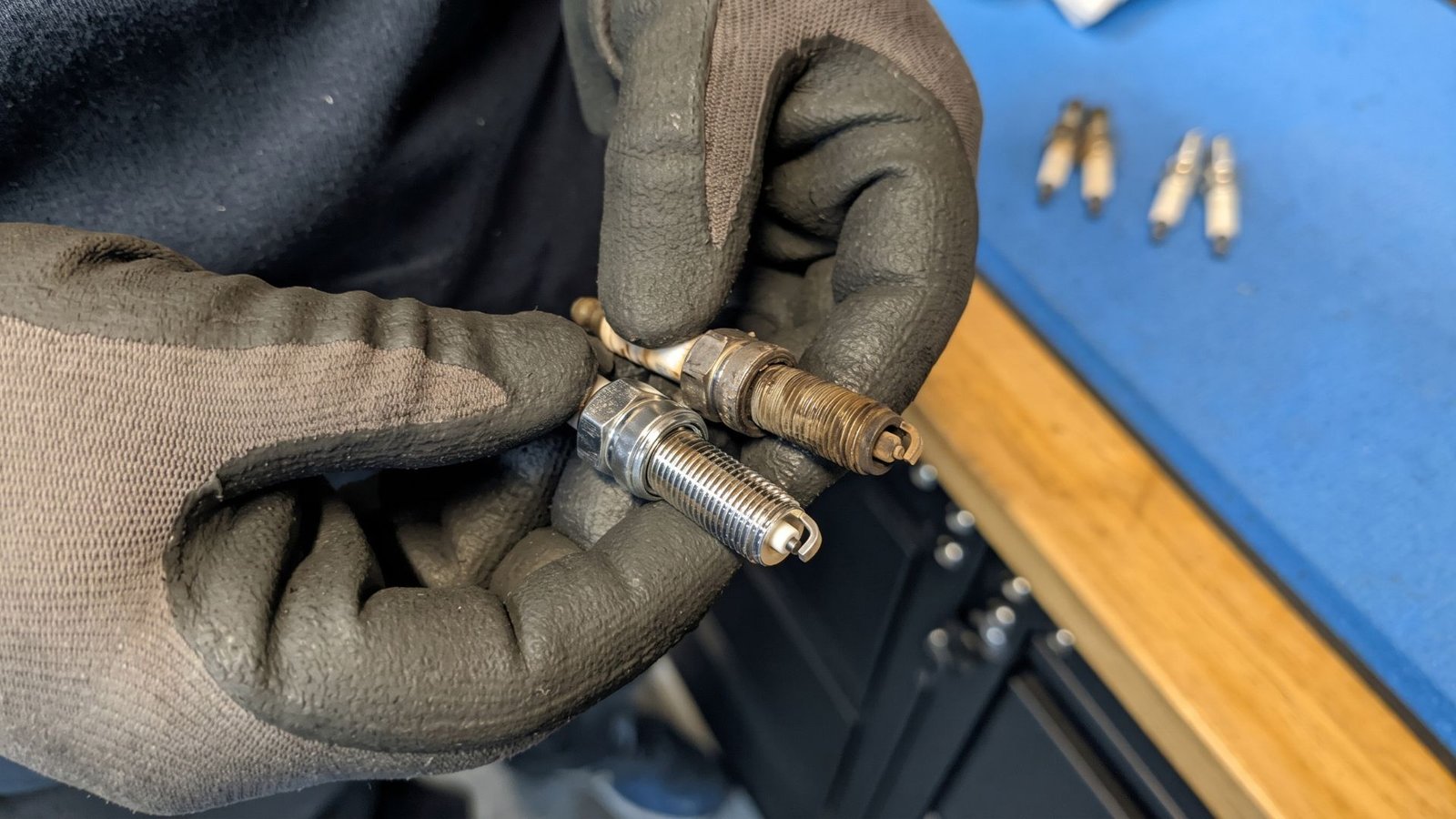
Spark plugs play an important role in your car, as they directly control your engine performance, fuel mileage, and exhaust emission standards. When a spark plug wears down, the air and fuel mixture inside your combustion chamber fails to ignite cleanly.
In turn, you could face certain issues, including the car cranking but not starting, decreased fuel mileage, rough idling, and misfiring.
The best way to know when to replace the spark plugs in your car is by following the service manual for your particular model. Different vehicles have different lengths of life span for their spark plugs. If you want to know the signs of bad spark plugs, keep scrolling to see what to look for.
7 Signs Your Spark Plugs Are Going Bad
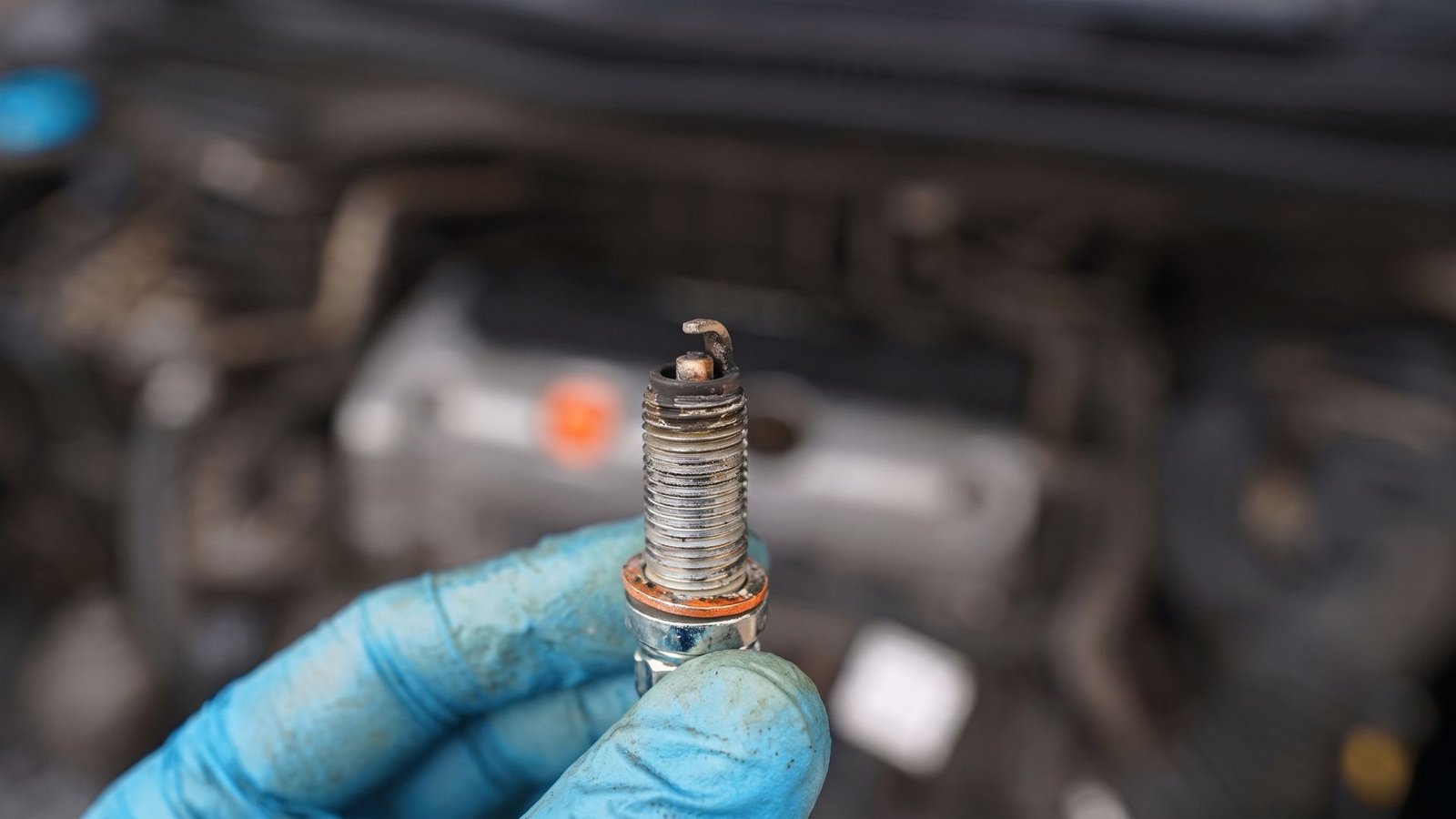
A worn spark plug does not stop working all the way overnight. In many cases, its performance gradually declines. You may notice changes in how your engine starts, accelerates, and runs at idle.
1. The Engine Misfires or Stumbles
A healthy vehicle motor runs with a smooth, steady rhythm at every speed. When a faulty spark plug fails to fire at the exact millisecond required, the cylinder skips a beat. You feel this immediately as a sudden jerk, hesitation, or brief stumble while cruising down the highway.
Damaged spark plugs can cause incomplete combustion. It stops the power stroke cold in one or more cylinders. This stutter often happens under quite heavy load. It could be during climbing a steep hill or merging into fast traffic.
2. A Rough, Shaky Idle
Pay close attention the next time you stop at a red light with your foot on the brake. A smooth engine hums quietly without shaking the steering wheel or vibrating the floorboards. If your car suddenly feels like it is shivering or about to stall, worn ignition parts are the primary suspect.
A weak spark plug struggles to ignite the air and fuel mixture when the engine revolutions drop low at a standstill. The tachometer needle may bounce up and down erratically instead of holding steady around seven hundred revolutions per minute.
Rough idling points directly to uneven cylinder firing, which throws off the natural balance of the motor. Sometimes the cabin shakes so hard that loose items in your cupholders rattle loudly against the plastic.
3. Your Car Takes Longer to Start
Turning the key or pushing the start button should bring the motor to life within a second or two. When the plugs lose their sharp edge, they need much higher voltage to jump the gap and create a spark. You will notice longer cranking times as the starter motor works overtime to turn the engine over.
This trouble becomes painfully obvious especially on a cold morning when thick oil and chilly air make ignition harder. If your battery, fuse, sensors, and starter test fine, symptoms of worn spark plugs are almost certainly behind the slow morning wake up.
4. Sluggish Acceleration
Pressing the gas pedal should deliver an immediate, confident surge of forward speed. If the car feels heavy, lazy, or slow to respond when you try to pass another vehicle, a fading ignition spark could be to blame.
Each cylinder needs a hot, bright arc of electricity to push the piston down with full force. When the electrode erodes, the flame front travels too slowly across the combustion chamber and wastes valuable energy. And what happens, in turn, is that you end up pressing the pedal deeper to the floor just to maintain normal highway speeds.
5. Decreased Fuel Mileage
Although your fuel average won’t suddenly drop from 15 kilometers per liter to 5, bad spark plugs typically trim efficiency by 5% to 15%, and severe misfires can cut it by up to 30%. The combustion in your engine becomes less efficient if you have near-dead spark plugs, and even some fuel may remain unburned and pass into the exhaust system, eventually decreasing your fuel mileage.
6. The Check Engine Light Pops On
Your car’s onboard computer monitors engine performance and looks for problems with combustion. If it detects repeated misfires, it may switch on the check engine light.
A diagnostic scanner can help identify the affected cylinder or show whether multiple cylinders are misfiring.
- P0300: Random or multiple cylinder misfires.
- P0301: Misfire detected in cylinder one.
- P0302: Misfire detected in cylinder two.
- P0303: Misfire detected in cylinder three.
These codes do not automatically confirm that your spark plugs are bad. Ignition coils, fuel injectors, and other engine components can trigger similar faults.
7. You Notice Visible Damage on the Spark Plugs
Pulling a plug out of the cylinder head gives you a direct window into the health of your motor. Always compare your old spark plugs to a new one to spot subtle changes in shape and color.
Look closely at the tip and electrode for excessive wear, rounded edges, or melted metal. Over time, spark plugs develop residue from unburnt gases and oils that coats the ceramic insulator.
A healthy spark plug shows a light tan or gray coating, whilst black soot points to a rich fuel mixture. Wet, dark deposits mean you have fuel and oil contamination inside the cylinder. When contamination is found, it is caused by oil, fuel, or coolant leaking past worn piston rings or gaskets.
Steps to Replace Your Spark Plugs
Most drivers can replace spark plug hardware at home with basic tools. You need a socket set, a spark plug socket, an extension, a torque wrench, and a gap gauge.
- Cool the Engine and Disconnect the Battery: Let the engine cool fully, because hot aluminum heads can strip threads. Then disconnect the negative battery cable.
- Blow Out Dirt Around the Coils: Use compressed air to clear dust from each coil and plug well. Dirt falling into a cylinder can cause damage.
- Pull the Ignition Coils: Unplug each connector, take out the bolt, and lift out the coil. Keep each coil with its cylinder.
- Take Out the Old Spark Plugs: Turn each plug counterclockwise with the socket. Work one cylinder at a time, and inspect each plug as it comes out.
- Install the New Spark Plugs: Check the gap on the new plug before dropping it carefully into the well. Always start threading the new plug by hand. This way you do not cross thread the soft metal inside the head.
- Torque the Plugs and Reattach the Coils: Use a torque wrench to tighten each plug to the exact manual specification. It will keep you from over torquing them. If you leave them too loose, they can work their way out and the engine will get louder than normal. Put all of the coils back onto the plugs, tighten their bolts, and reconnect your battery cable.
Frequently Asked Questions (FAQs)
How often should you replace spark plugs?
Depending on the type of spark plug and the information in your car’s handbook you should change them every 30,000-100,000 miles. Copper spark plugs generally last between 20,000-30,000 miles. Platinum and Iridium spark plugs often last between 60,000-100,000 miles.
What Are the First Signs of Bad Spark Plugs?
The earliest symptoms often include rough idling, engine hesitation, difficult starts, and occasional misfires. You might also notice reduced acceleration or declining fuel economy.
Can I Still Drive With Bad Spark Plugs?
You can drive a short distance to a repair shop if the car runs mostly fine, yet driving long term with a bad spark plug is a major gamble. Unburned fuel will eventually overheat and melt your catalytic converter, and this could, in turn, turn a cheap maintenance job into a significant repair bill.
What Does a Bad Spark Plug Look Like?
A worn plug often has a severely eroded center electrode, a wide gap, or heavy crusty deposits baked onto the ceramic tip. You might also spot cracked porcelain insulation, dark oil fouling, or black carbon soot covering the firing end.
Should I Replace All Spark Plugs at Once?
In most cases, yes. If your engine has multiple spark plugs and they have reached their scheduled replacement interval, replacing the complete set helps maintain consistent ignition performance.
How Much Does It Cost to Replace Spark Plugs?
Typically, it costs between $100 and $500+, although the exact cost depends mainly on your vehicle, plug material, labor rates, and engine accessibility. A basic four cylinder engine is generally less expensive to service than a V6 or V8.
Wrapping Up…
Spark plugs have a direct effect on how your engine starts, runs, and uses fuel. Worn electrodes, carbon deposits, and damaged insulators can all interfere with normal combustion. If you notice misfires, rough idling, difficult starts, or poor acceleration, inspect your spark plugs. If they require a replacement, do it as fast as possible to prevent unnecessary future repairs and to keep your engine running smoothly.