
You lift the lid expecting fluffy rice. Instead you get something closer to crunchy, and the cooker already clicked over to Warm like the job has been done. It isn’t, though. This is one of the most common complaints people have with these machines, and nine times out of ten it’s not the appliance dying on you.
It’s usually one small thing standing between the heating plate and the pot. A rice cooker turns to warm too soon far more often because of a contact issue or a measurement slip than any real mechanical failure.
How to fix a rice cooker that switches to warm too early? Well, you need to do a handful of quick checks, most of which take under a minute each. We’ll cover seven fixes you can try on, a rundown of when the problem points to a bad sensor instead, and an honest read on when it’s time to stop tinkering and call someone. Keep scrolling!
Key Takeaways
- Most early switch to warm issues come down to a dirty pot bottom, an uneven pot placement, or an incorrect water ratio
- Cleaning the heating plate and center sensor solves the problem in a large share of cases
- A genuinely faulty thermostat or sensor is possible but far less common than a simple mechanical or measurement issue
- Persistent problems after basic troubleshooting usually call for professional repair or replacement rather than DIY electrical work
7 Ways to Fix a Rice Cooker That Switches to Warm Too Early
1. Clean the Bottom of the Inner Pot
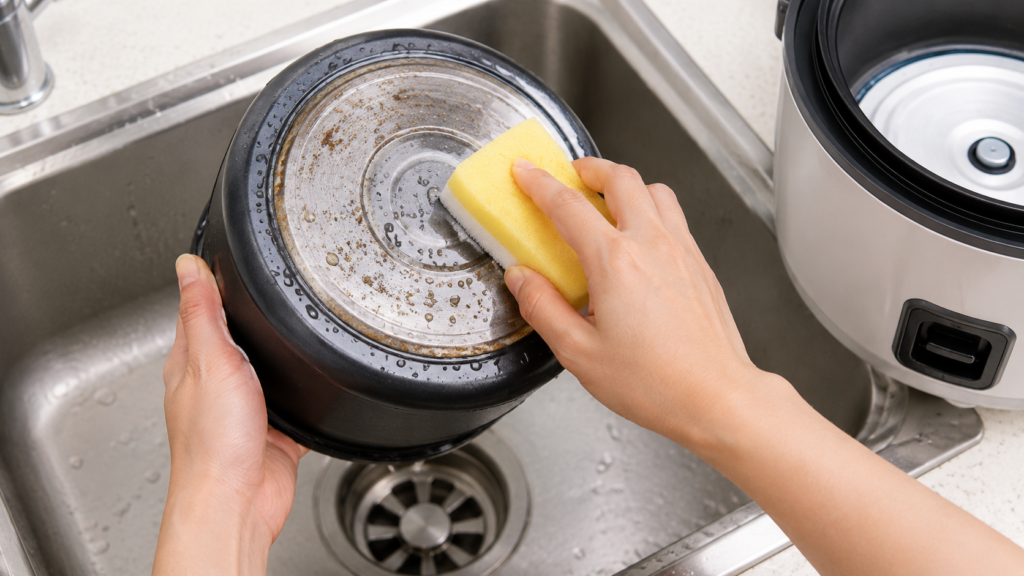
Rice starch, oil residue, and small food particles stuck to the bottom of the inner pot create an uneven surface that prevents proper heat transfer between the pot and the heating plate below it.
Even a thin film of buildup can insulate the pot just enough to trick the sensor into reading a temperature spike earlier than it should. What you need to do in this scenario is wash the pot thoroughly after every use and dry it fully before the next cooking cycle.
2. Clean the Heating Plate and Center Sensor
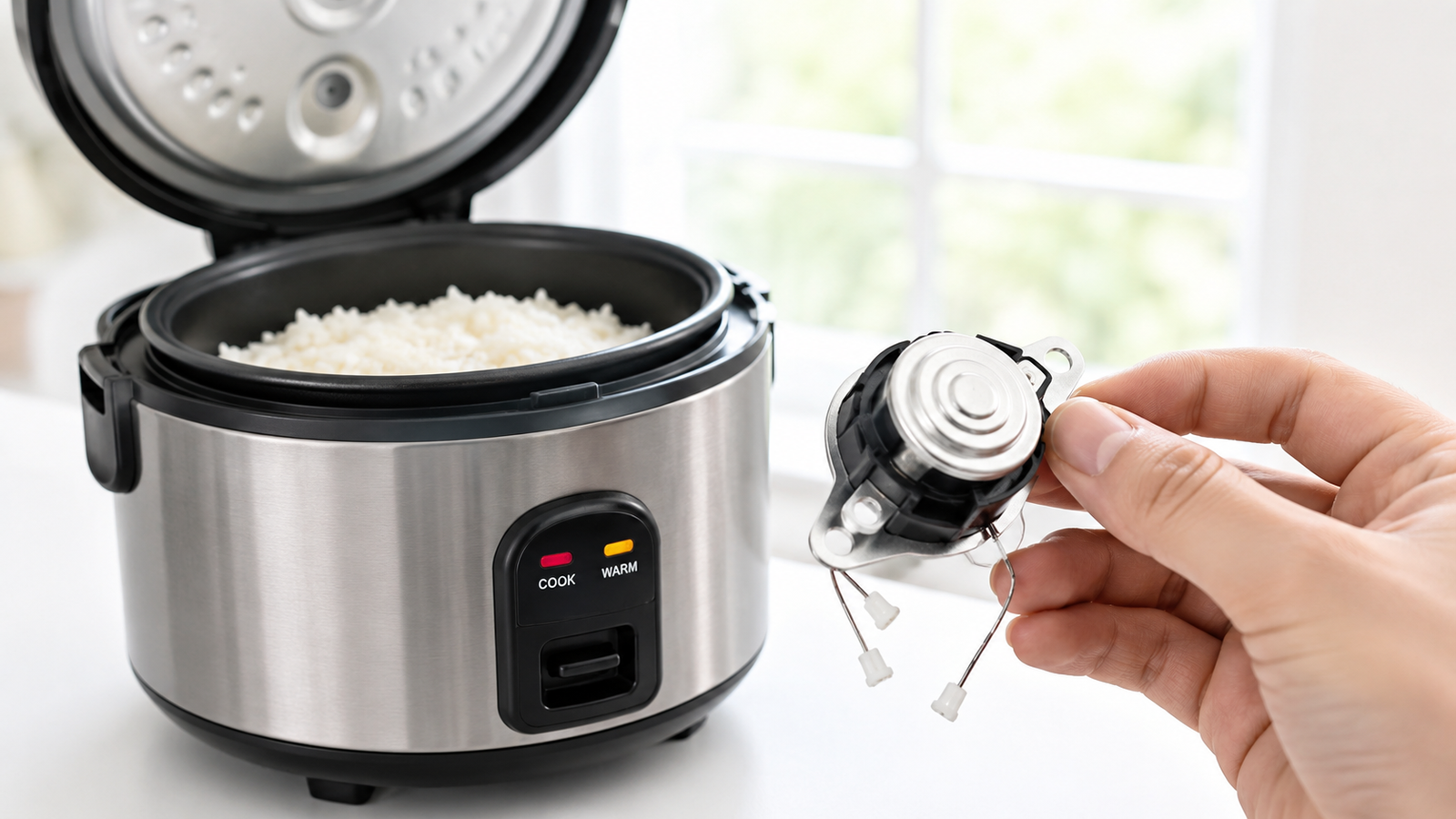
The heating plate itself, along with the small raised center sensor pin most rice cookers have, needs to stay clean and free of debris to function correctly. Rice grains, water droplets, and general kitchen grime could accumulate on this surface over time.
And even a small obstruction changes how quickly the sensor registers heat. Unplug the cooker completely, let it cool fully, and wipe down the heating plate and center sensor with a soft, slightly damp cloth. Avoid anything abrasive that could scratch the surface, since scratches can create their own heat transfer inconsistencies down the line.
3. Make Sure the Inner Pot Sits Flat
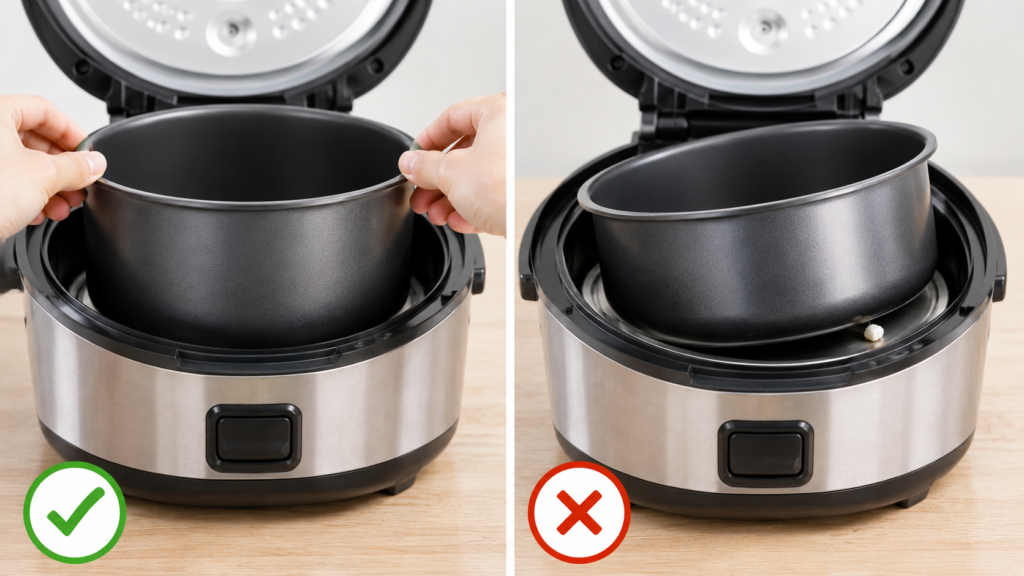
A pot that sits crooked, tilted, or slightly lifted on one side due to a stray grain of rice or debris underneath will not make full, even contact with the heating plate.
Turns out, part of the pot bottom heats faster than the rest, and the sensor can register the false temperature spike well before the rice has actually finished absorbing water and cooking through. Besides, double check that the pot drops into place cleanly and sits level before starting a cycle.
4. Check the Rice-to-Water Ratio
Too little water relative to the amount of rice means the water evaporates and the pot temperature rises to the shutoff threshold well before the rice grains have had enough time to fully absorb moisture and soften.
Most standard white rice cookers use a ratio close to one part rice to one to one and a quarter parts water, though this varies by rice type and by the specific cooker’s measuring cup. That is often smaller than a standard cup measure. Double check your ratio against your rice cooker’s manual rather than assuming a universal standard applies.
5. Check How Much Rice You’re Cooking
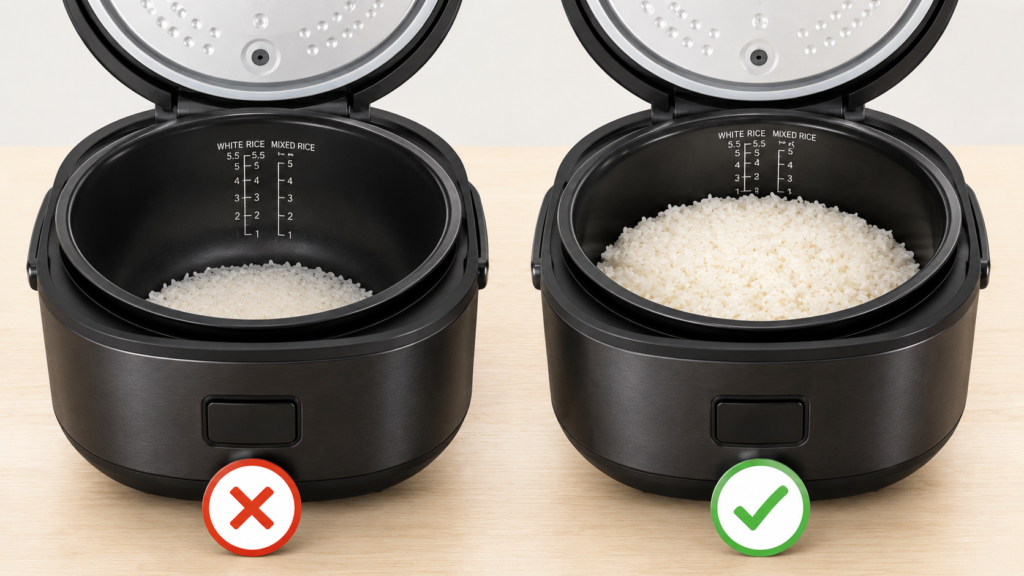
Cooking a very small batch of rice, well below the minimum quantity your specific cooker is designed to handle, can cause the water to evaporate unevenly and trigger an early cutoff.
Most rice cookers have a minimum recommended quantity printed in the manual or marked inside the pot itself. Cooking under that minimum threshold regularly produces the exact undercooked, early warm switch symptom described here.
6. Try a Different Outlet
An inconsistent or underpowered electrical outlet could also affect how quickly and evenly the heating element reaches temperature. It in some cases produces irregular heating patterns that confuse the internal sensor. This is a less common cause tho genuinely worth ruling out, especially if the rice cooker shares a circuit with other high draw appliances during cooking.
7. Let the Cooker Cool Before Starting Another Cycle
Starting a new cooking cycle immediately after finishing a previous one, while the pot and heating plate are still hot from the last use, throws off the sensor’s ability to accurately track the temperature rise associated with water evaporation.
Give the unit at least fifteen to twenty minutes to return to room temperature before running it again, particularly if you’re cooking back to back batches.
Another Good Read: How to Fix Car AC Blowing Cold only While Driving
Could the Temperature Sensor or Thermostat Be Faulty?
After working through the basic fixes above, some rice cookers still switch to warm early, and that points toward a genuine sensor or thermostat.
Signs of a Sensor Problem
- It switches to warm within a few minutes of starting
- It happens repeatedly with different rice quantities
- The pot and heating plate are clean
- Correct water measurements don’t change the behavior
- The cooker otherwise powers on normally
If several of these apply consistently, the internal thermostat itself may be misreading temperature or failing to hold contact properly. This is not something to attempt to bypass or disable yourself.
The thermostat exists specifically to prevent the unit from overheating once the water is gone, and disabling or working around it creates a genuine fire risk.
What If the Heating Plate Isn’t Getting Hot Enough?
A heating plate that never reaches the correct temperature in the first place produces an entirely different but related symptom. Rice that stays undercooked because the cooker never builds enough heat to properly cook it before switching modes on its own internal logic.
When It’s Probably Not a DIY Fix
- Heating element failure
- Damaged internal wiring
- Faulty thermostat
- Thermal fuse problems
- Internal switch or control mechanism failure
Any of these point toward an internal electrical issue rather than something solvable through cleaning or adjusting your rice ratio.
Opening the housing of an electrical appliance to inspect or repair these components yourself carries real electrical risk, and in most cases voids whatever warranty coverage remains.
At this stage, contacting the manufacturer for service or bringing the unit to a qualified appliance technician is the safer and more sensible path forward.
Quick Troubleshooting Checklist
Before your next cooking cycle, run through this list:
- Inner pot bottom is clean and dry
- Heating plate is clean
- Center sensor is unobstructed
- Pot sits flat and centered
- Correct rice amount is being used
- Correct water amount is being used
- Cooker has cooled if previously used
- Suitable wall outlet is being used
Working through this checklist before starting a new batch resolves the majority of early warm switch cases without needing to touch a single internal component.
When Should You Stop Using the Rice Cooker?
If your rice cooker continues switching to warm too early after confirming every item on the checklist above, and you have ruled out water ratio and quantity issues entirely, it is time to stop relying on the unit for regular cooking.
A rice cooker with a genuinely failing thermostat or heating element is not just inconvenient, it can pose a real safety risk if the internal components continue degrading unpredictably.
Unplug the unit and either arrange for a professional repair assessment or plan to replace it, particularly if the model is several years old and has seen heavy daily use.
Frequently Asked Questions (FAQs)
Why is my rice cooker cooking only on Warm?
This usually points to the unit failing to enter cook mode at all, often due to a stuck or misaligned pot, a dirty heating plate preventing proper contact, or in some cases a faulty switch mechanism that never registers the pot being properly seated.
How do I know if my rice cooker thermostat is bad?
If cleaning, correct rice ratios, and a properly seated pot don’t change anything, and the early Warm switch keeps happening across different batches, the thermostat is a likely suspect worth having checked.
Why is my rice cooker heating but not cooking the rice?
It can happen when the heating element gets hot but doesn’t maintain enough steady heat to finish cooking the rice. An incorrect water-to-rice ratio can also cause the water to evaporate too quickly. Rice needs enough time at around 212°F to fully absorb the water and soften. If the sensor detects a temperature spike too early, the cooker may switch to Warm before the rice is actually done.
Wrapping Up…
A rice cooker that switches to warm too early is almost always fixable without replacing the whole unit. Start with the simple mechanical fixes, cleaning the pot and heating plate, checking your water ratio, and making sure the pot sits flat, before assuming anything electrical has failed. Work through the checklist consistently, and if the problem persists across every variable you control, that is the signal to bring in professional repair help rather than attempting to open up the internal components yourself.